

A state-owned factory in a city most Western pharma executives couldn’t find on a map now sponsors more clinical trials than AstraZeneca.
Its cross-border drug licensing deals hit $135.7 billion in 2025 alone.
The most successful Chinese-origin pharmaceutical company in history redomiciled to Switzerland and changed its name.
In June 2017, a small team from a Chinese biotech company that almost nobody in the West had heard of walked into a presentation hall at the American Society of Clinical Oncology annual meeting and showed their data. ASCO is the biggest oncology research conference in the world. The data were from an experimental CAR-T cell therapy for multiple myeloma. The response rates were near 100% in heavily pre-treated patients. The room noticed.
Within months, Johnson & Johnson’s Janssen subsidiary signed a worldwide collaboration, paying $350 million upfront. It was one of the largest payments ever made for a China-originated therapeutic asset. The company was Legend Biotech, a subsidiary of a gene synthesis company called GenScript, operating from limited space in Nanjing. The therapy would eventually become Carvykti, the first and only cell therapy to show a statistically significant overall survival benefit in multiple myeloma. By mid-2025, it was generating roughly $439 million per quarter.
That moment would have been nearly unthinkable five years earlier. It has since become routine. In 2024, China's innovative drug license-out transactions reached 94 deals totaling approximately $51.9 billion. In 2025, the numbers more than doubled: 157 cross-border outlicensing deals worth a record $135.7 billion. In the first quarter of 2026 alone, deal value hit $60 billion, a 73 percent jump from the same period a year earlier and nearly half of the entire 2025 total. GSK signed a $12 billion alliance with Hengrui. Novartis paid $5.36 billion for a deal with Argo Biopharmaceutical. AstraZeneca agreed to a weight-loss drug collaboration with CSPC Pharmaceutical worth up to $18.5 billion, with $1.2 billion upfront. The direction of pharmaceutical deal flow has reversed entirely. A decade ago, Chinese firms overwhelmingly licensed drugs in from the West. Now nearly half of transactions flow the other way.
But here is what the deal figures don’t capture: Unlike other aspects of Chinese industrial policy (like cosmetics), China’s medical industrial policy that produced this innovation may not be able to sustain it. China’s domestic venture investment in biotech peaked at $15.7 billion in 2021 and plunged to $4.2 billion in 2024, in spite of surging cross border deals. Only four biotech firms listed on Chinese exchanges that year, the lowest since 2008. The government’s own pricing regime compresses margins on innovative drugs so severely that every major Chinese pharma company now depends on Western licensing revenue to fund its R&D. And in December 2025, Congress passed the BIOSECURE Act, a law that restricts how U.S. pharmaceutical companies receiving federal funds can do business with designated Chinese biotechnology companies, putting new pressure on exactly the cross-border integration that makes the whole system work.
This is not a simple success story. It is a story about a system, built deliberately over decades, that moved a country from the periphery of pharmaceutical R&D toward the frontier, and that now faces contradictions rooted in its own design. Four companies illuminate different pathways through that system. A recent working paper from the National Bureau of Economic Research adds precision about which forces drove what. And the structural tensions reveal whether any of it can last.
Assembling the Machine
Before the companies, before the deal flow, before the insurance reform that everyone is now trying to understand, something more basic had to happen. China had to build the capacity to innovate. That took decades, and it was not an accident.
The most important infrastructure change was the August 2015 State Council policy document that restructured the Chinese drug regulatory system. Before 2015, the system was rigid, redundant, and slow. The reform overhauled the Drug Administration Law, introduced a new Vaccine Administration Law, and rewrote the core regulations. Then, in June 2017, China joined the International Council for Harmonisation, committing to align its regulatory standards with the FDA, EMA, and other leading agencies. The NMPA adopted all 71 ICH guidelines and compressed review timelines for innovative drug applications from roughly 14 months to approximately 30 working days. A reduction of more than 90%.
The physical infrastructure came alongside it. “Made in China 2025,” “Healthy China 2030,” the 14th Five-Year Plan, and the construction of more than 100 state-financed biotechnology parks built a physical R&D base at a scale few countries can match. Capital market reforms opened pathways for biotech firms to list and raise funds. The Hong Kong Stock Exchange’s Chapter 18A rules allowed pre-revenue biotech companies to list on the main board. Shanghai’s STAR Market attracted innovative drug makers seeking domestic investors.
Then there were the people. China’s biopharma boom has been driven substantially by returnee scientists: researchers trained at Western pharmaceutical companies and academic labs who went back to China, bringing expertise, networks, and institutional knowledge about how drugs actually get developed and approved. Government recruitment programs actively cultivated this talent pool. The sector now draws from 30,000 active AI researchers at the intersection of AI and drug discovery, and China produces roughly 5 million STEM graduates a year.
None of this was self-assembling. Regulatory reform, physical infrastructure, capital markets, human capital. Each was the product of deliberate state investment. This was industrial policy: the state building the preconditions for an industry to exist.
But supply-side capacity alone does not explain the timing. China’s scientific output and talent base grew steadily throughout the 2010s. The clinical trial surge didn’t. Something happened around 2016 that activated the capacity. To understand what, you first need to see how four companies rode the wave, and how each of them ran into the same wall.
The 30-year grind
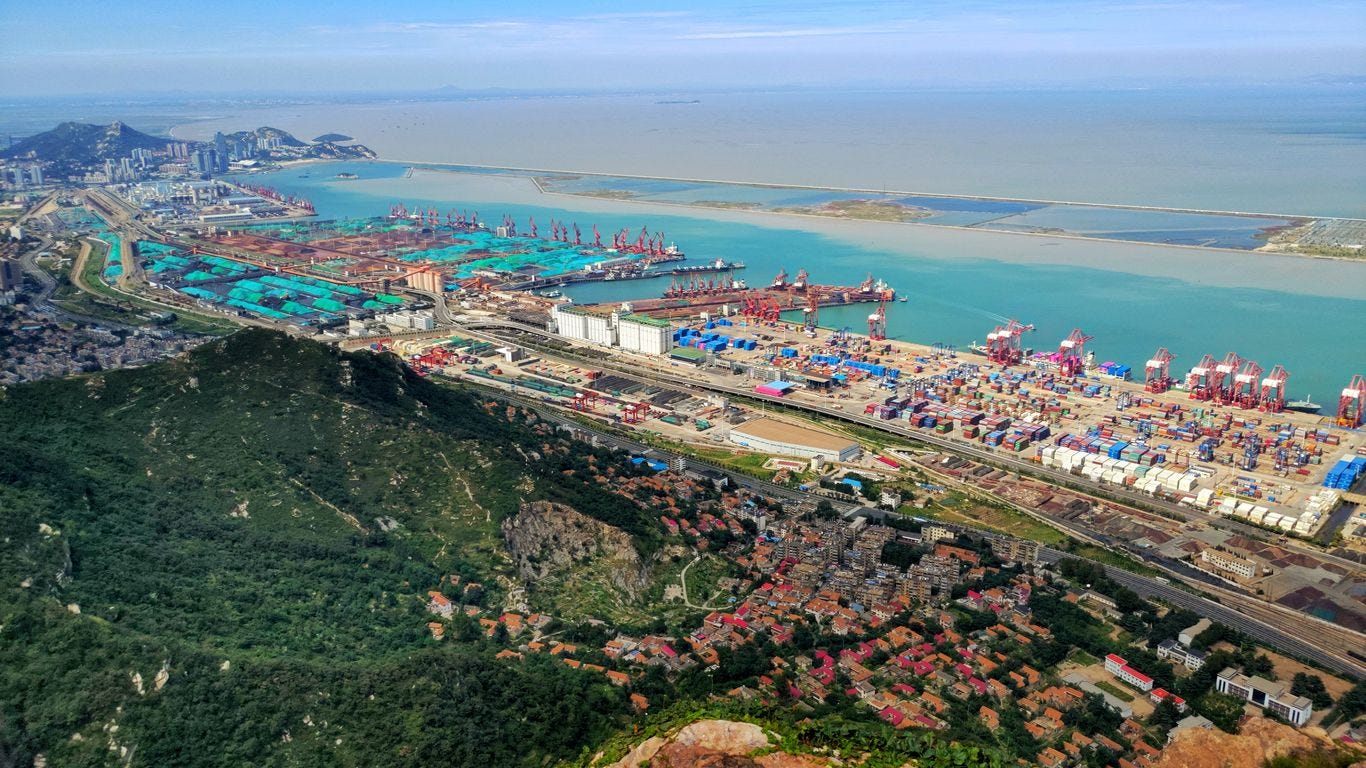
In 1970, the Chinese government opened a small pharmaceutical factory in Lianyungang, a mid-tier coastal city in Jiangsu Province. For two decades, it produced pharmaceutical ingredients and generic copies of Western drugs. Exactly the kind of operation that confirmed the conventional wisdom: developing countries consume medicines invented elsewhere.
When Sun Piaoyang took over in the early 1990s, he had a theory. Generics were a commodity business with vanishing margins. The future was innovation. But you couldn’t jump to the frontier overnight. So Sun pursued what he called “secondary innovation”: me-too drugs that improved upon existing Western molecules. Critics dismissed it as generics with extra steps. Sun’s argument was different. Secondary innovation was scaffolding. It built the capabilities that genuine novelty would eventually require. The company listed on the Shanghai Stock Exchange in 2000 and began a long, deliberate pivot.
Three decades later, the scaffolding has produced a building. Hengrui’s R&D spending increased 33.8% year-over-year in 2024, with over 29% of revenue going to research. Innovative drug revenue rose 30.6% to roughly RMB 13.9 billion ($1.9 billion). In 2024, Hengrui overtook AstraZeneca as the most prolific clinical trial sponsor on earth. A state-owned factory in a city most Western pharma executives couldn’t find on a map, out-trialing a century-old British-Swedish multinational.
But Hengrui’s story also reveals the tension at the heart of this system. The government’s pricing regime subjects drugs to negotiated cuts of 50–63%. Those cuts compress domestic margins on innovative drugs. Hengrui’s response has been to license assets to the West: a $12 billion GSK alliance, three obesity drugs to a Bain Capital/RTW-backed startup for up to $6 billion. The company doesn’t license directly to Western pharma. It licenses into separately capitalized Western entities, receiving upfront payments while retaining equity. The structure de-risks geopolitical exposure. It has been widely copied. But it also means that Hengrui, the company that most fully embodies China’s pharmaceutical transformation, cannot sustain its R&D from its home market alone.
Luxury of Time: What patient capital makes possible
Drug development grinds against the clock of capital markets. Most VC-backed biotechs don’t have 15 years. HUTCHMED could.
The company was established in 2000 as a subsidiary of CK Hutchison Holdings, Li Ka-shing’s conglomerate. That parentage gave it patient capital and freedom from quarterly fundraising pressures. Fruquintinib, its flagship molecule, was discovered entirely in-house, a highly selective VEGFR inhibitor designed to deliver anti-tumor efficacy with fewer off-target effects than competitors. The development timeline is itself the point: well over a decade from discovery to NMPA approval in 2018, making it the first China-discovered novel oncology drug (for metastatic colorectal cancer) to receive full approval in China. Then the global FRESCO-2 trial across roughly 130 sites in 10 countries. FDA approval November 2023. European Commission approval June 2024. Projected global sales exceeding $1.5 billion.
HUTCHMED built a hub-and-spoke partnership model: discovery in-house, Eli Lilly for China distribution, AstraZeneca for savolitinib, Takeda for global commercialization. In 2025, it sold a 45% stake in its non-core drug distribution business for $608.5 million to concentrate on next-generation programs. But notice the same pattern. The revenue that sustains R&D runs through Western partners.
Raids, Breakthrough, crisis, and the fragility of partnership
Return to the ASCO moment. Now for the full story.
Legend grew from a small team inside GenScript Biotech, operating as the “Legend Project” starting in late 2014. The bet was specific: target BCMA in multiple myeloma using a novel dual-binding-domain CAR construct, leveraging GenScript’s genetic engineering expertise and China’s access to a large patient population. The 2017 ASCO presentation happened. The $350 million J&J deal followed. FDA approval came in 2022. NMPA approval in August 2024 based on a trial showing 87.9% overall response. Manufacturing at scale in Ghent, Belgium. Over 7,500 patients treated globally.
Then the crisis. In September 2020, three months after Legend’s $424 million Nasdaq IPO, Chinese customs raided GenScript and Legend offices. Founder Frank Zhang was detained and later arrested for suspected smuggling related to human genetic resources regulations. Legend’s stock plummeted more than 15%. The company survived because Ying Huang, a former Wall Street analyst with a Columbia Ph.D., stepped in and held the J&J partnership together.
Legend’s model exploited a division of labor: China for discovery and early clinical work, J&J for the rest. It reached the world faster and with less capital than vertical integration would have required. But it also exposed a kind of risk that Western biotech boards have never had to plan for, the political vulnerability of Chinese founder-led companies working at the intersection of genetic data, cross-border research, and state security.
A Swiss Passport and a New Name
The arc reaches its high point with the company that made the biggest gamble and won, and then had to reckon with what winning meant.
In 2010, John V. Oyler, an American serial entrepreneur, and Xiaodong Wang, a member of the U.S. National Academy of Sciences, set out to build a vertically integrated, globally competitive oncology company from China. Not a licensing shop. A company that would discover molecules, run global trials, build its own salesforce, and sell its own drugs in the United States and Europe. First-in-human study of zanubrutinib in Australia in 2014. Commercial infrastructure built across the U.S., Europe, and Asia, burning through cash for years. R&D at approximately 52% of revenue in 2024.
The moment that changed the narrative was the Phase 3 ALPINE trial, a direct head-to-head against J&J’s ibrutinib in CLL. A loss would have been devastating. Zanubrutinib won. Reduced the risk of progression or death by 75% vs. bendamustine-rituximab in treatment-naïve CLL. The first FDA approval of a new chemical entity discovered in China. From roughly $42 million in 2020 revenue to $2.6 billion in 2024. Approved in 70+ markets. 100,000+ patients. $30 billion market cap.
Then came the identity reckoning. In November 2024, the company announced it would rebrand as BeOne Medicines. It changed its Nasdaq ticker from BGNE to ONC. In May 2025, it redomiciled from the Cayman Islands to Basel, Switzerland, joining Roche and Novartis as a Swiss-domiciled pharma company. John Oyler called it a reflection of “who we are today as a leading global oncology company.”
That is one way to read it. Another: a $30 billion company that was built in China, on Chinese scientific talent, with Chinese regulatory pathways and Chinese patient data, concluded that its Chinese identity had become a liability. The BIOSECURE Act was advancing through Congress. U.S.–China tariff uncertainty was escalating. More than three-quarters of American biotech companies contract out services to Chinese firms, and the political environment around those relationships was shifting fast. BeOne’s redomiciliation was not a corporate address change. It was an acknowledgment that the most successful Chinese-origin pharmaceutical company in history believed its origin story was becoming structurally incompatible with its commercial future.
A system built to produce Chinese pharmaceutical innovation produced a company so successful that it needed to stop being visibly Chinese. That is the contradiction, and it is not incidental. It runs through everything.
The Same Great Wall
Hengrui, HUTCHMED, Legend, BeOne. Four very different strategies. All four drew on the supply-side preconditions that decades of industrial policy built. The reformed regulatory system. The talent pipelines. The research infrastructure. All four produced globally validated molecules: FDA approvals, head-to-head trial wins, tens of billions in licensing payments from the world’s most demanding buyers.
All four share a structural dependency. They need Western revenue. The Chinese domestic market, despite being the catalyst that activated their innovation, compresses the pricing needed to sustain it. That paradox, a market that simultaneously creates and constrains innovation, turns out to be the central mechanism of the story. The sharpest academic evidence available helps explain how it works.
Demand Side Policy is Industrial Policy
The supply-side preconditions grew steadily through the 2010s. More publications, more scientists, more infrastructure, year after year. But the clinical trial surge was not steady. Something happened around 2016 that converted latent capacity into an explosion of activity.
A working paper published this year by the National Bureau of Economic Research, “From Free Rider to Innovator: The Rise of China’s Drug Development,” by Panle Jia Barwick at the University of Wisconsin, Hongyuan Xia at Cornell, and Tianli Xia at the University of Rochester, provides the most comprehensive attempt so far to disentangle the competing explanations. The authors compiled a synchronized database spanning clinical trials, scientific publications, drug sales, and government policies across China, the U.S., and Europe from 2010 to 2024.
A few caveats before the findings. This is a working paper. It has not been peer-reviewed. The identification strategy is credible, an event-study framework with disease-by-country fixed effects, placebo tests, and multiple robustness checks, but the specific magnitudes will be debated, and the decomposition leaves a substantial unexplained residual. What follows should be read as the best available evidence on a specific question, not as settled fact.
The paper zeroes in on a specific policy: the National Reimbursement Drug List reform.
Before 2016, China had nearly universal health coverage, more than 95% of the population, but the national formulary prioritized low-cost generics and excluded innovative drugs. Patients paid full price out of pocket for novel therapies. The innovative drug market totaled just ¥66 billion ($10 billion) in 2015. A market of 1.4 billion people that was, for innovative drugs, effectively tiny.
Starting in 2016, the National Healthcare Security Administration launched centralized “price-for-volume” negotiations. Firms accept average price cuts of 50–60% in exchange for NRDL inclusion, which guarantees access to roughly 1.4 billion insured lives at low coinsurance rates. By 2024, 699 drugs had been included. Cumulative spending reached ¥460 billion ($67 billion) between 2016 and 2024. The inclusion criteria explicitly favor new molecular entities and reward clinical novelty and unmet needs.
The paper documents what happened to individual drugs after NRDL inclusion. Retail prices dropped roughly 50% (66% for oncology). But quantities sold increased 350% on average, and nearly ten-fold for cancer drugs. Net producer revenue increased about 100% on average and roughly 500% for oncology. Given low marginal production costs (the authors estimate about 18% of pre-negotiated price), these revenue gains flowed through to profits.
The timing evidence is clean. Benchmarking China against the U.S. at the disease-country-year level, the paper shows flat pre-trends before 2016 and a sharp divergence starting in 2016–2017. By 2024, China’s trial volume had expanded by 172% relative to the U.S. High-novelty trials increased 123%. And 88% of the post-2015 increase was driven by domestic firms, not multinationals relocating R&D.
The paper’s strongest finding may be the placebo test. Disease categories never exposed to NRDL expansion showed no systematic increase in trial activity after 2015. The diseases with the largest NRDL expansion, including non-small cell lung cancer, liver cancer, and renal cancer, saw the sharpest increases. The contrast is stark.
The decomposition exercise attempts to quantify relative contributions for oncology: 43% attributed to the NRDL reform, 24% to knowledge accumulation and talent flows, less than 1% to other government policies. About 32% remains unexplained.
Those numbers need careful reading. The less-than-1% figure for industrial policy does not mean industrial policy was unimportant. It means that within the paper’s framework, once you account for the NRDL, knowledge stocks, and talent, the additional explanatory power of counting policy documents is small. But the regulatory reforms, biotech parks, talent programs, and capital market infrastructure that industrial policy built over decades are preconditions baked into the base of the model. The NRDL would not have produced a clinical trial surge if no firms had been capable of running trials, no regulatory system capable of processing them, and no scientists capable of designing them.
The honest reading is that both were necessary. Industrial policy built the capacity over decades. The NRDL activated it by changing the expected returns. The paper’s contribution is to show that the demand-side market expansion was a larger factor than most observers had assumed, and that its design features (rewarding novelty, targeting unmet needs) shaped the direction of innovation, not just the volume. That is a genuinely important finding. It does not mean the supply side was optional.
One more result, and it may be the most consequential for anyone thinking about drug pricing. For 57 cancer drugs included in the NRDL, the short-term consumer surplus gain from expanded access is approximately ¥35.6 billion ($5.1 billion) per year. The long-run gain from roughly 60 additional oncology drugs induced by the reform is approximately ¥67.6 billion per year. If those estimates are broadly right (and they are one study’s estimates), the long-run gains from induced innovation are roughly three times the short-run gains from improved access.
The standard framing of drug pricing treats it as zero-sum: lower prices increase access but reduce innovation incentives. The NRDL evidence complicates that. Under specific conditions (massive population coverage, genuine monopsony power, inclusion criteria that reward novelty), a price-volume reform may be able to expand both access and innovation simultaneously. Whether that finding generalizes beyond China’s specific institutional context is a question the paper cannot answer. But the direction is suggestive enough that health system architects in other countries should be paying attention.
Strengths and Fragilities Are the Same Thing
So the system works. The supply-side capacity was built. The demand-side shock activated it. The companies produced globally validated drugs. The licensing revenue is flowing.
But the system’s contradictions are not footnotes. They are structural, and they are getting worse.
Start with the domestic funding crisis. The NRDL expanded the market for innovative drugs and activated the capacity that industrial policy built. It also compressed domestic margins. Average negotiated price cuts of 50–63% mean that Chinese companies cannot generate enough domestic revenue to fund globally competitive R&D from the home market alone. Meanwhile, China’s national priorities have shifted. Government subsidies that once flowed generously to life sciences are being redirected toward semiconductors and computing, leaving local venture capital firms with less support. Venture investment in Chinese biotech peaked at $15.7 billion in 2021 and collapsed to $4.2 billion by 2024. Cash-strapped Chinese biotechs are increasingly out-licensing assets not because they want to, but because they have to, selling molecules to Western buyers to stay solvent and fund their remaining programs. At JPMorgan Healthcare Conference 2025, industry observers reported that Eastern funds and biotechs arrived ready to sell, proactively showcasing portfolios, a reversal from previous years when deals had to be hunted.
This is not a healthy equilibrium. It is a fire sale dressed up as a licensing boom. The numbers look like acceleration, and they are. Deal value hit $135.7 billion in 2025 and is on pace to exceed that in 2026. UBS projects that China's innovative drug market will grow at an annualized pace of 20 percent between 2026 and 2030, with the broader pharmaceutical industry generating revenues of $2.1 trillion by the end of the decade. But those projections sit alongside a domestic venture market that has collapsed by 73 percent since its peak. The innovative drug market is growing. It is not growing fast enough to replace the funding sources that are disappearing. Every quarter of record-breaking outbound licensing is also a quarter in which Chinese biotechs are selling molecules to Western buyers because the domestic capital environment no longer supports carrying them to commercialization alone.
Then there is the geopolitical problem, which is not abstract. On December 18, 2025, President Trump signed the BIOSECURE Act into law as part of the FY2026 National Defense Authorization Act. The law restricts U.S. federal procurement and grants involving biotechnology products or services provided by “biotechnology companies of concern.” Any company on the Department of Defense’s 1260H list of Chinese military companies is automatically designated. A process led by the Office of Management and Budget will name additional companies, with annual updates.
The law’s reach extends deep into the pharmaceutical value chain. Its definition of “biotechnology equipment or services” covers sequencing tools, data-storage platforms, cloud-based bioinformatics, CDMO services, and certain reagents or diagnostic devices. Any U.S. pharma company that conducts federally funded research or manufactures products purchased by government programs would need to validate the provenance of its entire upstream infrastructure. Prominent contract research and manufacturing organizations like WuXi AppTec and WuXi Biologics are not currently on the 1260H list and are not immediately subject to the law’s restrictions. But more than three-quarters of American biotech companies contract out preclinical and clinical services to Chinese companies, and 30% depend on China-linked companies for manufacturing of approved medicines. The most significant consequence may not be the immediate prohibition but the gradual decoupling of federal biomedical programs from globally integrated supply chains.
BeOne’s redomiciliation to Basel. Hengrui’s NewCo structures. Legend’s J&J partnership. These are all corporate architectures designed to navigate decoupling. But they are navigating it from a position of dependency. The pharmaceutical supply chain between the U.S. and China is too integrated for clean separation. Chinese companies were 35% of announced pharma M&A targets in 2025. It is also too politically charged for business-as-usual. The result is an unstable middle ground where every deal, every trial, every licensing transaction now carries a geopolitical risk premium that did not exist five years ago.
And the pipeline itself faces concentration risk. Innovation remains heavily concentrated in oncology, where NRDL coverage went deepest. The PD-1/PD-L1 overcrowding, more than 80 molecules in China, is what demand-pull incentives look like when they cluster around a single validated pathway. China now accounts for 24% of the world’s first-in-class pipeline, and more than 40% of the pipeline is fast-follower or first-in-class. The composition is genuinely shifting. But data integrity remains a credibility issue. A peer-reviewed analysis of FDA inspections from 2016 to 2023 found no significant difference in clean inspection outcomes between Chinese and Western sites in multi-regional trials, which is reassuring. But transparency in disclosing inspection findings still lags, and perception matters for a system that depends entirely on Western regulatory acceptance.
Each of these problems traces back to how the system was designed. The price compression that drives the licensing boom is the flip side of the market expansion that activated innovation. The geopolitical exposure comes from the integration that commercializes the innovation. The concentration in oncology reflects the targeting that directed R&D toward unmet needs. You cannot have the strengths without the fragilities. They are the same thing.
The Factory in Lianyungang
In 1970, the Chinese government opened a pharmaceutical factory in a mid-tier coastal city. It made generic drugs. In 2024, that company overtook AstraZeneca as the most prolific clinical trial sponsor on earth.
Between those two dates, a system was assembled. Decades of industrial policy laid the regulatory infrastructure, the talent pipelines, the research parks, the capital markets. An insurance reform activated that system by changing the expected returns to innovative drug development. Four companies took four different paths through it and each produced globally validated molecules. The best available academic evidence suggests the long-run welfare gains from the induced innovation substantially exceed the short-run gains from expanded drug access.
But the system has a problem it has not solved. It produces world-class pharmaceutical innovation. It cannot pay for it at the prices needed to sustain the investment. Domestic venture funding has collapsed. Government priorities are shifting toward semiconductors. The companies that embody the transformation are licensing their assets to stay afloat, redomiciling to foreign jurisdictions to shed their identities, and navigating a law whose stated purpose is to decouple the supply chains they depend on.
The most successful Chinese-origin pharmaceutical company in history concluded that it needed a Swiss passport and a new name. The licensing boom that the deal tables celebrate is, in part, a funding crisis selling molecules at market. And the geopolitical environment on which this system’s commercial viability depends is tightening, not loosening.
Can the system that created the innovation learn to sustain it? That is the question, for the companies, for Beijing, and for every Western pharmaceutical executive trying to figure out whether the next check they write buys them a molecule or a geopolitical liability.
Seems like Chinese vats are still churning… “A geopolitics expert recently told Semafor that pharmaceuticals could emerge as a future chokepoint, giving Beijing a potential cudgel.”
Western pharmaceutical firms are increasingly linking themselves to companies that develop drugs in China to get new medicines to market. US giant Eli Lilly signed a $2.75 billion deal with Hong Kong-based Insilico Medicine, which has a significant R&D presence in Shanghai, to use AI to develop new drugs, while Chinese drugmaker Huahai Pharmaceutical inked a licensing agreement with Spain’s Almirall. The deals underscore China’s growing prominence in the pharma sector: The country now produces many of the key ingredients for essential medicines, and a record number of foreign companies licensed treatments made by Chinese firms in 2025.
This is when. https://igreaterchina.substack.com/p/chinas-r-and-d-surge-redefining-the?r=gf5z1&utm_campaign=post&utm_medium=web