

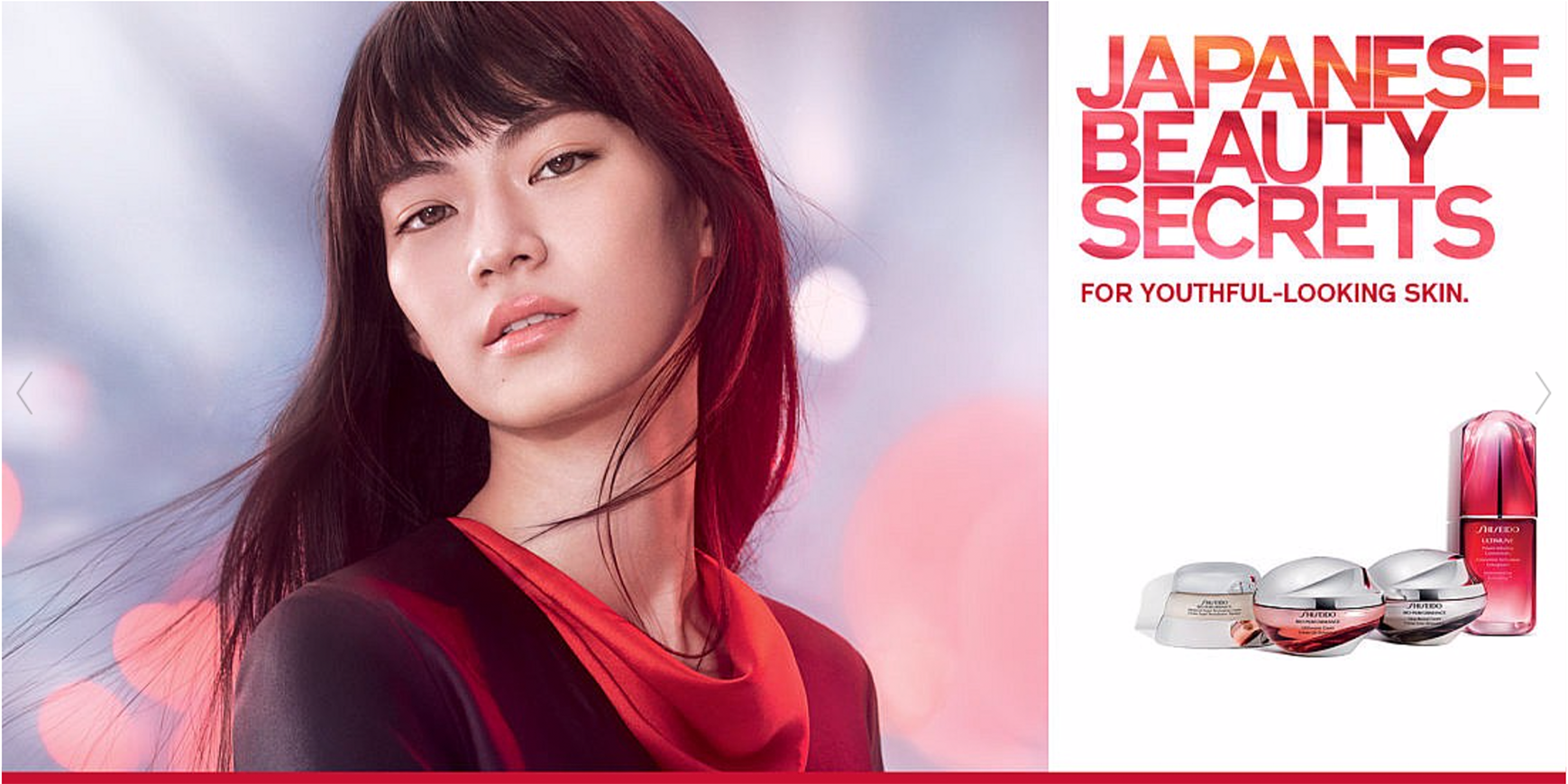
Shiseido hit the wall in 2023. UNIQLO hit it in 2024. Toyota is hitting it now.
The sequence isn’t coincidence. In November 2025, Shiseido announced a ¥52 billion loss, the largest in its 153-year history. Activist investors had acquired a 8.30% stake. Innovation centers in Singapore and Korea were shuttering. Some 2,000 employees had been laid off across three rounds. The standard narrative: China exposure bad, domestic markets good.
The reality is just delightfully messier, which makes it more instructive. Shiseido suffered both a structural shock it couldn’t control and execution failures it absolutely could have avoided. Most coverage conflates these. Companies watching should separate them, because only one is avoidable.
Ever-eroding, yet Still Standing “Made in Japan” Premium
In 2017, when Shiseido committed approximately ¥1,385 billion to new Japanese manufacturing capacity, the China thesis looked solid. By February 2018, the company had crossed ¥1 trillion in revenue three years early. China sales grew 20.1% that year. The stock had quintupled from ¥1,500 in 2014 to over ¥8,000. CEO Masahiko Uotani, brought in from Coca-Cola Japan, declared that “all regions are growing” and “momentum is accelerating.”
China’s middle class was expanding. Japanese cosmetics carried cachet, perceived as safer, higher-quality. The “Made in Japan” premium was real and monetizable. Against this backdrop, aggressive investment was the consensus view. Analysts praised the strategy. Competitors did the same.
Kao Corporation, Japan’s next largest cosmetics company by domestic market share, took the opposite approach: cautious China entry, limited exposure, domestic focus. While Shiseido built China to 25% of revenue, Kao kept exposure modest. Kao avoided the catastrophic collapse and missed the upside of the boom. During the good years, Shiseido dramatically outperformed. On that note, Kao is rapidly becoming more aggressive starting 2024.
Was Shiseido’s strategy wrong in expectation, or merely unlucky in outcome? The Fukushima water release was not foreseeable in 2017, though in 2023, when ALPS processing water was released, Chinese consumers reduced purchases of Japanese cosmetics. The severity of guochao nationalism (the rise of Chinese domestic brands like Florasis and the “new Chinese aesthetic”) was not widely predicted. COVID’s lasting impact on Chinese consumer behavior could not have been anticipated. Shiseido made a reasonable bet that went badly, which is different from making a bad bet.
What's clearer in retrospect: Shiseido's strategy lacked optionality. The company captured upside but had no downside protection. Kao's caution (not typically associated with strategic advantage) preserved flexibility, allowing it to navigate the collapse without catastrophic exposure. Now Kao is attempting what Shiseido failed to do: aggressive growth combined with real hedges (geographic diversification, manufacturing flexibility). Whether they can sustain both or end up overextended like Shiseido remains to be seen.
China Comes For All Industries
The China cycle repeats across industries because it’s policy, it’s clearly not an accident.
Foreign companies enter China seeking growth, build up local competitors through market development and knowledge transfer, then watch their position erode as Chinese brands capture the capabilities they helped create. Harvard researchers studying the auto sector measured this directly: when a joint venture model scored one standard deviation higher on quality, affiliated domestic firms improved by 0.098 standard deviations in those same dimensions. Worker flows and supplier overlaps transmitted roughly 54% of this knowledge transfer. The USTR’s Section 301 investigation documented the explicit strategy: “introduce, digest, absorb, and re-innovate” foreign technologies, a deliberate approach outlined in China’s technology development plans.
What makes China’s approach distinctive is its comprehensiveness. No sector is too small or too consumer-facing to escape strategic cultivation.
Consider cosmetics. Historically regarded as pure marketing, not technology. Lipstick and moisturizer. The kind of industry you’d expect governments to ignore entirely.
Instead, China issued the Cosmetics Supervision and Administration Regulations (CSAR) in June 2020, taking effect January 1, 2021. The regulation introduced mandatory pre-market safety assessment requirements, and cosmetic efficacy claims must be supported by sufficient scientific evidence. This isn’t consumer protection. It’s industrial policy designed to upscale the quality of skincare China can produce. In 2022, China’s State Administration for Market Regulation and 17 other central government departments jointly released the Action Plan for Further Improving the Quality of Products, Engineering and Services (2022-2025), which proposed cultivating high-end brands in cosmetics and other consumer product fields. Eighteen government bodies coordinating on lipstick.
Local governments offer direct subsidies. Guangzhou provides up to 1 million yuan for new cosmetic ingredients that are first-time applications in China’s cosmetics ingredient directory, with individual enterprises capped at 5 million yuan annually. Beijing established a cosmetics new ingredient innovation award program offering subsidies for enterprises registering or filing new cosmetic ingredients. In 2024, 90 new cosmetic ingredients were notified; a significant increase from 69 the prior year. It’s a historic high that dwarfs the 14 ingredients approved between 2004 and 2020. Domestic chemical companies moved from imitation to invention, protected by regulatory architecture favoring local players.
I want to be clear about how strange this is. The Chinese government treats mascara the way other governments treat semiconductors. There are land grants for eyeshadow innovation. Political slogans about “New Quality Productive Forces” applied to face cream. According to H1 2024 financial reports, Huaxi Biology’s R&D expenditure reached 201 million RMB, with the company framing their investment in synthetic biology platforms using party-approved language designed to unlock state support. For a company that makes hyaluronic acid.
PROYA’s trajectory shows what this produces. The company reached ¥10.78 billion yuan in 2024 revenue, aiming to invest ¥2.1 billion in R&D (approximately 21% increase but it’s questionable if they actually did invest), holds 229 patents, and operates a Paris research center. Chinese domestic brands now invest over 3.5% of revenue in R&D compared to 1.5-3.5% for foreign brands operating in China, demonstrating a strategic commitment to catching up through innovation.
The strategic implication is uncomfortable: what China did to solar panels, semiconductors, and electric vehicles, it is doing to cosmetics. The state has decided that Chinese women should buy Chinese moisturizer, and it is building the industrial base to make that happen. Foreign companies in any sector should assume China has or will develop an industrial policy for their industry. The question is not whether displacement pressure will emerge, but when. If they’ll do it for lipstick, they’ll do it for anything.
Ephemeral Dreams Burst like Bubbles
The August 2023 Fukushima water release triggered a consumer backlash unrelated to Shiseido’s products or execution. Japanese cosmetics became politically suspect overnight. Weibo boycott campaigns accumulated hundreds of millions of views. Shiseido’s stock fell in the following week. This was geopolitical risk materialized, a government decision creating commercial consequences no company could prevent.
Simultaneously, China’s macroeconomic deterioration accelerated: property crisis, youth unemployment, consumer confidence collapse. And PROYA’s rise meant competition had fundamentally changed.
Companies can capture substantial value during the boom phase of the China cycle, as Shiseido did from 2015-2019. The error is assuming the boom phase is permanent rather than building exit options while the position remains strong.
UNIQLO and Toyota initially seemed like counterexamples: Japanese firms navigating China successfully while Shiseido collapsed. That interpretation aged poorly.
UNIQLO China sales fell 4% year-over-year in H1 fiscal 2025, operating profit down 11%. Store count contracted for the first time after years of expansion. Founder Yanai Tadashi acknowledged in April 2025 that the fundamental issue with UNIQLO China is that all stores operate identically and the company hasn't been able to develop products tailored to local customer needs.
Toyota’s China sales fell 13.7% in H1 2024, then 6.9% for the full year. By late 2025, November sales dropped 12.1% year-over-year, three consecutive months of contraction. A parts supplier told Nikkei that China operations had become “a fight for survival.” Japanese automakers’ combined share of the Chinese passenger vehicle market fell from roughly 23% in 2020 to under 15% by 2025.
UNIQLO’s “success” and Toyota’s “resilience” bought time. It’s not an exemption, as you quick to find out. The 1,000+ Japanese companies that have left China since the 2012 peak, the decline in foreign direct investment from $344.1 billion in 2021 to just $45 billion in 2024: these form a pattern Shiseido previewed, not an anomaly it alone suffered.
The self-inflicted collapse
Here’s what the China narrative obscures: a substantial portion of Shiseido’s ¥52 billion loss had nothing to do with geopolitics.
The Drunk Elephant disaster, a ¥46.8 billion goodwill impairment, accounts for roughly 90% of the record loss. This was a 2019 American acquisition ($845 million) meant to provide geographic diversification through a “clean beauty” brand targeting millennials and Gen Z. By 2025, sales had dropped over 40% year-over-year. Shiseido exited the Japanese market entirely for the brand.
The pattern isn’t new. Shiseido acquired Bare Escentuals (bareMinerals and BUXOM) in 2010 for $1.9 billion, added Laura Mercier in 2016, then sold all three brands in 2021 for just $700 million. The M&A graveyard predates the China shock.
Strip out the Drunk Elephant writedown, and the story changes considerably. The structural China pressures are real and would have damaged earnings regardless. But the “largest loss in 153-year history” framing reflects acquisition failure as much as geopolitical exposure.
The lesson isn’t just “international markets are risky.” It’s also “Shiseido is bad at acquisitions.” Companies watching should separate these failure modes. The China cycle is largely unavoidable for firms that entered during the boom. The acquisition disasters were entirely avoidable.
UNIQLO offers an instructive contrast. The company spent two decades building American operations store by store, learning from failures, including the 2005 New Jersey disaster when three suburban mall stores opened to empty parking lots and closed within a year. When China weakened, UNIQLO had genuine alternative markets built through organic capabilities that acquisitions cannot replicate.
What this means
The China cycle isn’t a grim reaper and can be managed. Rising domestic competitors, nationalist consumer preference, industrial policy favoring local champions, macroeconomic deterioration: these forces affect all foreign companies in China. The question is not whether to enter (for most companies during the 2010s, entry was correct) but how to structure presence so eventual de-risking remains possible. Exit timing matters more than entry timing. The companies suffering worst expanded most aggressively during the boom and lack clear exit paths.
If I am forced to boil it down into a set of lessons, it would be:
Domestic markets are strategic assets just like the business rhetoric says it is, not legacy burdens like most business act like it is. Shiseido’s Japanese operations kept the company viable through the collapse. Kao’s historic caution preserved fallback positions. But “stable” is not “attractive.” Japan’s market is mature, the population shrinking. Retreating to domestic markets carries its own risks, and again it is important to note that Kao is becoming more aggressive with expansion.
National branding is a type of infrastructure. A 2019 study in the Journal of Innovation and Entrepreneurship found that a one-unit increase in national brand strength correlated with a 0.23% increase in high-tech export share. The “Made in Japan” premium that protected Shiseido eroded precisely because Chinese industrial policy built alternatives while nationalist sentiment shifted preference. Countries that want their companies to compete globally need comparable support systems. Switzerland’s watches and Germany’s automobiles benefited from decades of deliberate national brand building.
Organic expansion builds what acquisition cannot. Shiseido’s acquisition track record is poor across geographies and decades. UNIQLO’s patient expansion built institutional knowledge. For most firms, the acquisition shortcut destroys more value than it captures.
Assume China has an industrial policy for your industry. The cosmetics case proves that no sector is too consumer-facing, too marketing-driven, too apparently trivial. If five ministries will coordinate on moisturizer, nothing is safe. Plan accordingly.
Shiseido will likely survive. The company has real strengths: genuine R&D capabilities, brands that still mean something, a domestic customer base that hasn’t abandoned it. Restructuring can rebuild around these.
The case is instructive because it was early, not because it was unique. The China boom that defined global corporate strategy for two decades is ending. What remains is the harder work of building durable competitive positions in a world where the easy growth is gone and a Chinese government has opinions about who should make your lipstick.