


On a clear September morning in 2024, in Baldwin Village, South Los Angeles, Mayor Karen Bass stood on a five-acre lot at the corner of Coliseum Street and La Brea Avenue and turned a ceremonial shovel. Behind her, renderings showed a six-storey building with 800 flats stacked above a Costco warehouse. A local resident, Karen Johnson, told NBC she was excited because “we only have a Ralphs right here.” Governor Newsom sent a statement. Councilmember Heather Hutt sent another. Of the 800 flats, 184 would be reserved for households at 30, 50, and 80% of area median income, with the lowest band renting at $1,040 a month. The project was privately financed. No Low-Income Housing Tax Credits. Just a wholesale club agreeing to be the load-bearing tenant.
A year later, Marina residents gathered in the parking lot of an iconic mid-century Safeway at the foot of the Golden Gate Bridge. The store is known to locals as the “Singles Safeway” for its Monday-night dating scene, has been there since 1959, and is a neighbourhood institution. A developer called Align Real Estate had proposed replacing it with a 25-storey, 790-unit residential tower designed by Arquitectonica, with the Safeway returning at 57% larger on the ground floor. Eighty-six of the flats would be deed-restricted to very-low-income households. The protest signs went up. Marina Community Association’s Erin Roach delivered the line: “We’re not anti-housing, we’re anti this development.” The mayor of San Francisco, Daniel Lurie, agreed with her. So did his ally on the Board of Supervisors, Stephen Sherrill, who had quietly removed the parcel from the citywide upzoning plan a month earlier. Both denounced the developer for “gaming the system.”
(On that note: Daniel Lurie is opposing this housing project in his city while polling his weakest on housing, with 78% of San Franciscans saying cost of living has gotten worse.)
Two projects. Roughly 800 flats apiece. Both anchored by a major retailer. Both rely on the same state law: California’s AB 2011, the Affordable Housing and High Road Jobs Act. One mayor turned the shovel herself. The other promised to fight.
Why does this matter?
The dominant story about American housing politics in 2026 is that the YIMBYs won. State legislatures have passed pre-emption laws. Pro-housing reformers have been elected in major cities. The zoning code is, slowly, being rewritten. We have been here before. We had Tesco’s Spenhill in London in the 2000s. We have had Hong Kong’s Housing Authority since the 1960s. We have had Gavin Newsom’s “3.5 million homes by 2025” pledge. The relevant question is not whether the rhetoric has shifted, but whether the rhetorical shift will translate into actual buildings.
This matters because the answer determines whether the United States can build out of its housing crisis or merely talk out of it. If state pre-emption laws hold, then several million flats become possible across underused commercial sites in expensive coastal metros within a decade. If the laws are quietly hollowed out by mayors who run as reformers (especially centrist reformers) and then govern as obstructionists, then the rhetoric was the policy and there is nothing else coming. Misdiagnosing why the Marina Safeway will or will not get built is the difference between betting on the law and betting on the politicians. Bet on the law and the politicians become weather. Bet on the politicians and the law becomes window-dressing. The Marina Safeway is one test of which bet is right. The Coliseum Costco is the other.
What’s wrong with the conventional story?
The conventional account of the Coliseum project, repeated by Mayor Bass and most of the friendly coverage, runs as follows: a pragmatic Democratic mayor of a large American city has used a clever new state law to deliver hundreds of units of affordable housing on a previously underused parking lot, in partnership with a beloved retailer and a private developer, all without federal subsidies. This is what good housing politics looks like. It is replicable. It is the future.
The strongest version of this story is genuinely compelling. AB 2011 is a remarkable piece of legislation. The Coliseum project is going up. Bass did champion it publicly. The 184 affordable units are at rents that working-class South Los Angeles families can afford.
It is the inference about the mayor that fails.
Karen Bass has, on closer inspection, a striking pattern of behaviour on housing that is hard to reconcile with the “pragmatic reformer” narrative. She stood up an ambitious permit-streamlining programme called ED1 and then rolled it back once development applications started flowing in. She opposed SB 79, the state bill allowing more apartments near transit stops, on the grounds that it deprived the city of granular control. She opposed allowing Palisades fire victims to build duplexes on their own lots, explaining to a podcast host that “the people in the Palisades didn’t want that…if you impose it on a neighbourhood, then you will have hardcore NIMBYs.” People has taken to calling her Mayor NIMBY (which is, on reflection, slightly unfair to the NIMBYs, who tend to be more honest about what they want). Daniel Lurie in San Francisco might follow the same pattern (in miniature so far), with the addition that his hostility to specific projects is more openly stated. Both happen at once: the headline embrace of one prestige project, and the quiet obstruction of the broader regime that would produce many more.
The pattern is not ideological inconsistency. It is loss aversion as urban policy. The anger of one miffed homeowner is felt by a mayor about twice as heavily as the gratitude of one new tenant. The new tenant doesn’t yet live in your district. Kahneman and Tversky’s old finding (losses register about twice as heavily as gains of equal size) predicts the entire mayoral career arc. The political incentive runs against new construction even when the policy preference runs for it. Which is exactly why the law has to do the work the mayor will not.
The story is not that good mayors deliver housing. The story is that even mostly-good mayors will obstruct housing whenever it is politically convenient, and the only thing even enables the production of buildings is the law and the political economy. Bass turned the shovel at the Coliseum because the project had already cleared AB 2011 review and at the time, the YIMBY coalition was strong enough to prevent Gavin Newsom from siding with her on this issue like he did with the duplexes. Had AB 2011 not existed, or had Bass possessed any local lever to slow the project down, I would not be writing this paragraph. The relevant agent is the statute, not the politician.
Why would anyone want to live above a Safeway?
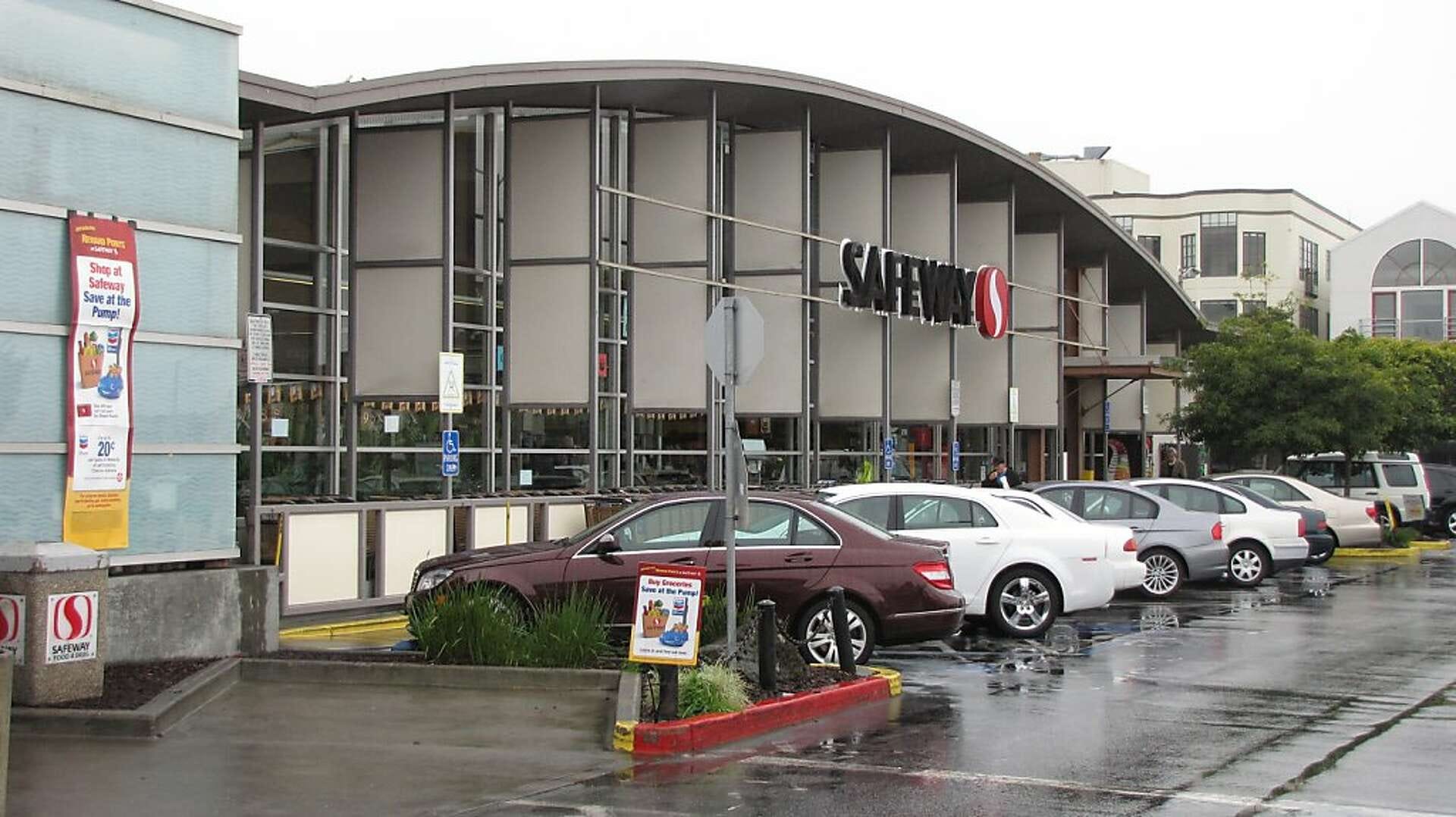
Marina Safeway, as the San Francisco Standard put it in February 2026, “the NIMBYs’ last stand”: the mayor opposes it, the local supervisor opposes it, the neighbourhood opposes it, and the law still requires it to be approved. The Planning Department issued a notice of conditional AB 2011 eligibility on 24 March 2026. Under the statute, the city has 180 days from a complete application to issue a final decision. The deadline is 1 August 2026.
Yes, you get that and you are going to ask “So, what?”.
I have said almost nothing about why anyone would actually want to live above a Safeway. The politics is impossible to understand without the product, which is what the urbanism literature has done the least to defend.
The central observation of behavioural economics: human beings are far more affected by friction than by price. If you make something ten seconds harder and people stop doing it. Make it ten seconds easier and they start. Reshaping of daily life over the last twenty years has been about removing small frictions like faster free delivery or smartphones. The grocery-anchored mid-rise applies the same idea to the activity humans spend more time on than any except sleep: keeping themselves fed.
Consider what it is to forget the onions in America. Forgetting the onions is a delightful little sidequest. You might even ask yourself whether the dinner can survive without them. You consider takeout. You give up and get in the car. You might drive 1.6 or 5.6 miles to the nearest grocery store. Then you have to find the onions, most likely queue at self-checkout rather than a person. Finally, you drive home, and arrive forty-three minutes later with a slightly mutinous spouse.
In a grocery-anchored mid-rise, you take the lift down, walk past the rotisserie chickens, pick up the onions, take the lift back up. The whole excursion takes four minutes or maybe it’s ten minutes tops.
Industry analysis finds that ground-floor premium grocery stores increase the rent achievable above them by up to 5.8%, and that number is low. It reflects only what landlords currently know how to capture. Renters would pay considerably more if the typology were less unusual.
Rory Sutherland has a line that applies here. Modern luxury is not really about size or expense. It is about not having to schlep. The richest people in San Francisco don’t have larger refrigerators than the merely well-off. They have private chefs, which is a way of paying $300,000 a year to make the schlep someone else’s problem (a luxury good the IRS has not, to its credit, yet found a way to define as taxable compensation). You could say that the grocery-anchored mid-rise democratises a slice of that luxury. The lift in a Marina Safeway tower is, functionally, a private chef. Most likely a worse one, considering the state of cooking among my peers and Gen Z, admittedly. But available to everyone in the building, at no marginal cost beyond the rent.
Aesthetic objections is the part of this debate is something I find least persuasive. Marina’s opposition rests on the assumption that a one-storey supermarket plus a surface car park on prime waterfront land within sight of the Golden Gate Bridge is somehow attractive. It is not. It is a deeply ugly piece of mid-twentieth-century commercial sprawl that San Franciscans have learned to mistake for “neighbourhood character” because they have lived with it for so long. The cities the Marina’s defenders love when they go on holiday (you can guess) are entirely composed of flats above shops. Edinburgh’s New Town is a grocery-anchored mid-rise from 1770 with a Sainsbury’s at the bottom; you have nothing to teach the Edinburgh planning department (besides the fact that said planning department may also be NIMBYs ignoring history) about preserving neighbourhood character.
Grocery anchor is often the only genuinely good thing on the block. The Marina Safeway is iconic because Marina residents go there repeatedly, with affection. The proposal, recall, is to expand the Safeway by 57% while putting flats above it. It is puzzling that this counts as a controversy until you remember Sam Moss’s observation that wealthy neighbourhoods learned long ago to define their preferences as principles, and Veblen’s older observation that those principles tend to exclude the most people.
The most important fact about these buildings: almost everyone who has lived in one would do it again. The Wegmans-anchored apartments in Washington DC have waiting lists. The Whole Foods-anchored buildings in Los Angeles fill up the day they open. The Hong Kong Wah Fu Estate, opened in 1968, retains higher resident satisfaction scores than most British council estates of equivalent age. In Tokyo, the integrated Ito-Yokado towers are prestigious. The product works. The market knows. The mayor of San Francisco may not yet.
Why is this harder to stop than it looks?
The product love above is not separate from the politics. It is the politics. Three forces make grocery-anchored housing harder to kill than ordinary apartment development. Most opposing politicians haven’t noticed.
The typology is global and mature. Apartments stacked on a concrete or steel podium over a supermarket are the default mode of dense urban housing in much of the world. In Hong Kong, the Housing Authority has been building exactly this kind of building since the 1980s; about 2.13 million people, roughly 30% of the territory’s population, lived in Public Rental Housing in early 2025, most of it in podium-anchored estates. The ten-year supply target for 2025/26 to 2034/35 is 308,000 public units. In Singapore, 77.2% of the resident population lives in HDB flats, roughly 90% of large-format HDB shophouses are anchored by NTUC FairPrice, and the HDB built 21,000 such flats in its first three years of operation. In London, Tesco’s Spenhill subsidiary built more than 4,000 flats under Mayor Livingstone’s residential-led London Plan, until Tesco’s 2015 retrenchment killed the pipeline, of which more later. The American examples (Beckert’s Park on Capitol Hill, The Exchange in Wheaton, the various Whole Foods-anchored projects in DC and LA) are catch-up, not innovations.
The grocery anchor brings a constituency that ordinary apartment developments lack. A developer fighting NIMBYs alone is on hostile rhetorical terrain. The actual political economy is more complicated, but at community-meeting altitude “developer” is shorthand for “rich greedy person,” and that’s the altitude these fights are conducted at. A developer fighting NIMBYs with Costco or Safeway as co-sponsor is in an entirely different argument. Costco is consistently rated one of the most-trusted retailers in America. Its CEO Ron Vachris has described the Coliseum project as a way “to enter markets where traditional big-box development would be nearly impossible,” and the Coliseum alone is expected to create 400 permanent retail jobs plus thousands of construction jobs. The Marina Safeway has the kind of intergenerational neighbourhood loyalty no developer can manufacture by himself; opposing 800 flats above it is one thing, but opposing the expansion of the Singles Safeway (57% bigger, with a wider deli counter and more checkouts) is much stranger to argue at a community meeting.
This is the part that should be on every protest sign and conspicuously isn’t. The Marina opposition is asking that its favourite neighbourhood Safeway not be allowed to get bigger and better. The thing the protesters say they love (the daily-life utility of the store, the Monday-night singles tradition, the iconic mid-century building) would, under the proposal, get a substantial upgrade. The thing they say they want to preserve, the surface car park, would be the only thing lost. Try writing that on a placard.
Tesco in 2000s Britain mobilised the same dynamic: it was easier to argue with planners about flats than to argue with everyone who shopped at the Tesco. The grocery anchor is a constituency, with employees, customer loyalty, brand favourability, and UFCW representation behind it. When NIMBYs fight Costco or Safeway directly, they are fighting an organisation with more political capital than they have. They are, in many cases, fighting their own friends.
The desirability of the building disarms the standard objection. The standard NIMBY argument runs: a tall building here would destroy the neighbourhood character. The argument assumes the building is undesirable. When the building turns out to be exactly the kind of place people want to live, with a grocery store downstairs they already like, the argument collapses on its own. The Marina Safeway opposition is struggling to articulate a coherent harm. The Tenants Union explicitly declined to oppose the project on the grounds that “there’s nobody being harmed by that, except the shoppers who will temporarily have their Safeway closed.” When even the tenants’ lobby refuses to oppose your tower, you are no longer fighting NIMBYism. You are fighting nostalgia, and nostalgia is not a permitting category.
It can’t just be the policy?
You might say, “Hold up! We seen laws passed for other things, and only ADUs really get built at scale! How does groceries make a difference?”
Laws enable development, but it doesn’t actually build units. Consider what a developer has to assemble to finance affordable housing without an anchor tenant. The standard American capital stack runs to five separate sources: Low-Income Housing Tax Credits, allocated by state agencies on a competitive lottery with two-year wait times; state and local subsidies, each with its own application process; deferred developer fees, which don’t pay out until the building stabilises how many years later; CDFI loans, cheaper than commercial debt but slower to underwrite; and tax-exempt bond financing where available.
A typical “affordable” project takes three to seven years of predevelopment work before a shovel hits the ground, and roughly ~10% of total project cost is spent on assembling the financing itself.
Grocery-anchored typology shortcuts the entire stack. A Costco or Safeway lease underwrites the “affordable” component privately. The math works because grocery retail is one of the few credit-worthy commercial uses with stable long-term cash flows that can be securitised against the residential portion’s construction loan. Predevelopment shrinks from years to months. The Coliseum’s capital stack closed without a single LIHTC application, which the developer has described as a model for replication.
So NIMBYs are feeling with these projects are wider and better-financed than the neighbourhood-association opposition. Even where mayors object, the laws operate independently of them. The British experience is the cautionary case. In 2007, under Mayor Livingstone’s residential-led London Plan, Tesco set up its Spenhill subsidiary to develop housing above its own stores. By 2014, Spenhill had built more than 4,000 flats across a series of London sites and was the largest single grocery-anchored housing programme in Europe. Then, in 2015, under new CEO Dave Lewis, Tesco retrenched. The Spenhill sites were sold off, the development arm was wound up, and the pipeline died with it. The flats already built remain (residents seem perfectly happy with them, fifteen years on). The flats that would have followed never came. When the political economy rests on a single retailer’s strategic appetite, the policy lasts as long as the appetite does. AB 2011 is built differently: the supermarket is one supporting leg, the law is another, and the labour coalition is a third. Knock one out and the others hold. Tesco died, and the buildings stopped. AB 2011 cannot die without an act of the California legislature, which neither the building trades nor the grocers will permit.
What can a town do to encourage its supermarkets to do this? Should I agitate for my consumer co-op to seek a developer to stack a few residential floors on top?
Not a bad article, but some paragraphs have a writing style reminiscent of AI, which is a bit distracting.