

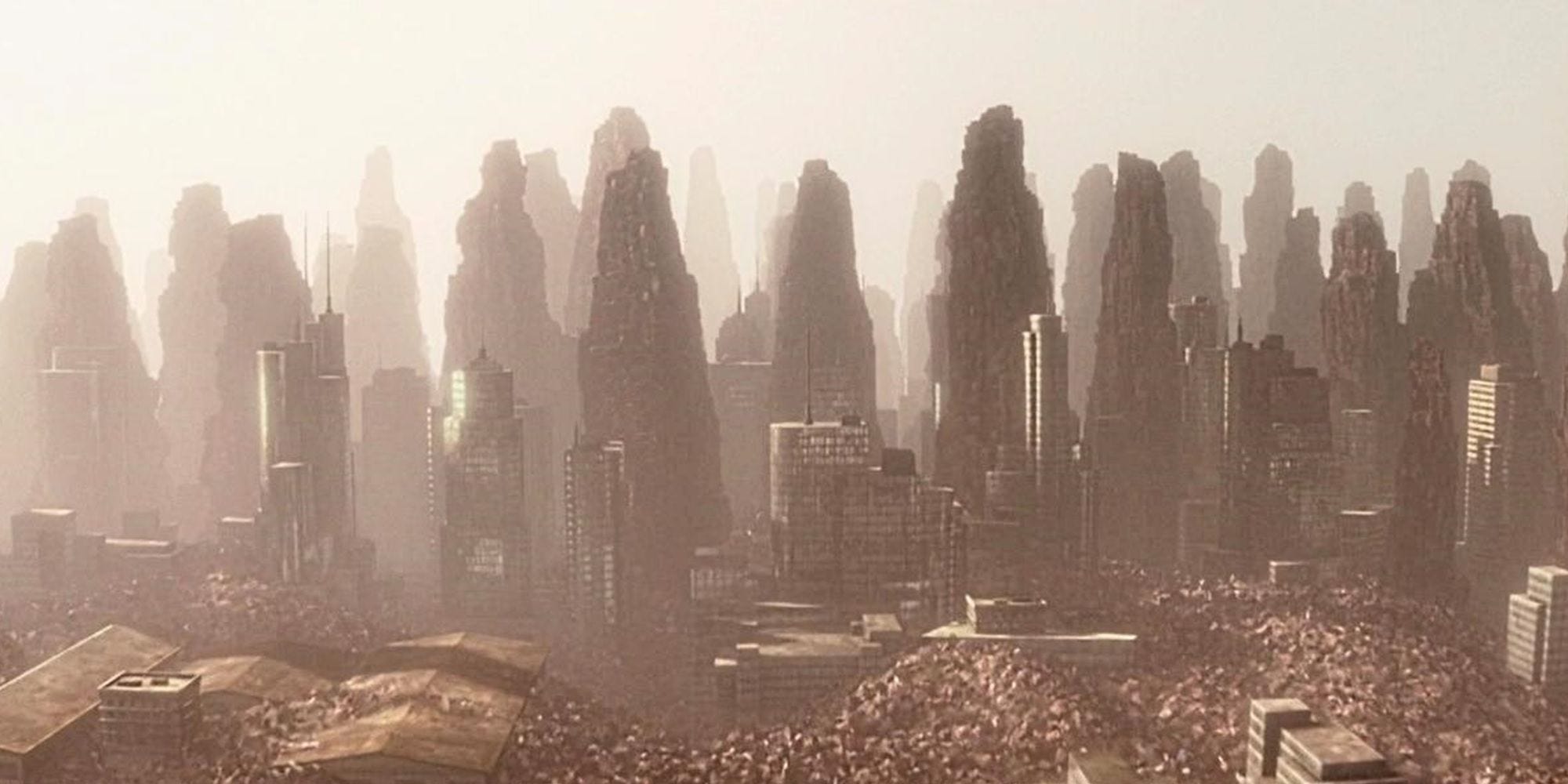
The last new landfill in Iowa, near Davenport, was built thirty years ago.
Nearly one-third of Iowa’s thirty-seven active landfills have less than 30 years’ capacity left under their current permits, according to a 2025 survey. In Middle Tennessee, five of the region’s seven permitted landfills could reach capacity within ten years, against a state waste stream of about 13 million tons a year.
Neither state is short of land. Iowa’s sites are hemmed in by the towns that grew up around them, by abandoned coal workings underneath them, and by neighbouring municipalities whose consent an expansion requires. Landfill capacity is not just a question of land. It’s a question of (permitted) air space, within hauling distance of your municipality, and located within political boundaries that will put up with it.
THE CASE THAT NONE OF THIS IS NECESSARY
An analysis of waste management options, “Just Bury Your Trash” by Alex Chalmers of the Cosmos Institute and Rob Wiblin of the 80,000 Hours Podcast, argues that recycling has been oversold, that properly-designed, modern, lined landfills are much better than their reputation, and that most of what is currently being diverted into recycling should be buried, though exceptions should be made for items like metals that can be profitably recycled.
Their case rests primarily on
a) the often-unclear life-cycle arithmetic around recycling
b) contamination issues around recycling streams
c) the expense of salvaging certain items (especially plastics)
d) the fact that landfills take up less than 0.01 percent of land in the U.S.
Chalmers and Wiblin acknowledge that burning can be environmentally friendly because controlled incineration reduces waste volume, produces far less methane than landfills, and can be made environmentally responsible, but reject it on cost grounds.
Chalmers and Wiblin’s essay is aimed at redirecting environmentalist energies away from individual-level recycling and towards what happens to our trash today. However, I think they underestimate the extent of regional price variability, and thus the importance of incineration as an alternative. I assume throughout that the cost of burial itself will not change much, an assumption I return to below.
Currently, the U.S. buries about four-fifths of the trash it doesn’t recycle or compost. This makes sense because burial is currently much cheaper than incineration, as on average, burial is 20 to 30 percent cheaper. But an examination of actual prices suggests that there is very wide variability in prices, and that incineration may well make sense in cities with little room to expand, especially when haulage costs are considered.
As of 2024, the average ‘gate fees’, which are the cost to bring garbage to a landfill, range from around $45 per ton in the South Central U.S. to $80.67 in the Northeast. By state, prices range from about $35/ton in Kansas to $124.25/ton in Alaska. These figures don’t include transportation costs, which can substantially raise prices.
For cities with ready access to reasonably priced dumps, burial is the clear choice, though not necessarily a permanent one; as Shenzhen is now discovering, airspace filled cheaply today can become an excavation bill decades later. The set of such cities is also shrinking for reasons that have little to do with environmental politics: Iowa and Tennessee are Republican-run and land-rich, and neither can site what it needs. But for others, the math runs the other way, and it is not close.
SCARCE GOOD IS PERMITTED CAPACITY NEAR A CITY
But new landfill space requires land and technical investments, transportation, political permission, and overcoming NIMBYism. And when landfills close, the land doesn’t then become available. Fresh Kills is supposed to become a park, eventually, and will be 2,200 acres, almost three times the size of Central Park. That will take decades and considerable money.
“Cheap and close” has a date on it
These arguments assume that short-term landfilling conditions hold true over time horizons of several decades. But these conditions change over time. The amount of airspace will be used up. The list of substances of interest will increase.
PFAS get through landfill liners and make their way into the leachate. There’s no standard for PFAS in landfill leachate at this point, but that doesn’t mean compliance isn’t expensive, just that no one knows how expensive compliance will be.
In 2024, EPA designated PFOA and PFOS as hazardous substances under CERCLA (upheld by the D.C. Circuit in August 2026). Landfills face strict, retroactive CERCLA liability, and there are no exceptions for landfills that are merely receiving someone else’s waste.
Urban growth is encroaching into formerly peripheral areas closer to the center of town. This means that the opportunity cost of using land for landfills is increasing.
Shenzhen’s Yulong landfill, where China’s largest-scale landfill excavation began in 2024, demonstrates how landfills are an implicit liability. Yulong was Shenzhen’s first municipal landfill, originally opened in 1983 on the periphery of the city. The landfill accepted waste until 1997 and was capped in 2005 and is now surrounded by high-rises. Now, however, it is being excavated, with waste sorted into different material streams, the combustible fraction being taken to nearby waste-to-energy plants, and contaminated soil being excavated for treatment. The landfill did not have an impermeable liner at its base. The project involves the removal of 2.55 million cubic metres of waste and is scheduled for completion by the end of September 2026, freeing up approximately 30 hectares of land to be developed as an industrial cluster.
When presented with shrinking landfill volumes, cities have four options: ship, expand, treat, or minimize. Shipping and expanding are popular options at the moment, but these too are finite strategies that don’t change the amount of garbage we produce and have to stick into the ground.
In Iowa’s Boone County, officials are taking steps to stretch the life of its landfill. Starting in July of 2027, it will stop accepting garbage from Ames. That should add an estimated two decades of capacity.
Nearby in Linn County, there’s no comparable land to accommodate a new landfill. Officials say they’ll likely turn the landfill into a transfer station and pay to have the garbage taken elsewhere, a move they expect could double tipping fees.
Already, the landfill near Marion has absorbed debris from a 2008 flood, a 2020 derecho and a hailstorm that damaged more than 80,000 roofs across eastern Iowa. Officials expect the landfill will fill eight years earlier than anticipated, in 2036. As Boon’s administrator puts it, “we are running out of room, and it’s not just the Boone County Landfill.”
All of which leads us back to the Tennessee legislature, and solutions. The Waste-to-Jobs bill, for instance, would require brands to pay to fund statewide collection of aluminium, glass, and plastic. Its sponsor believes “it’s not going to happen with incremental steps.” That’s all very nice, but the plants needed to divert are not yet built, markets to buy diverted items are assumed, not necessarily assured, and $171 million a year in valuable material is a lot of maybe. Passing diversion bills is cheap; delivering diversion isn’t.
Seoul could not replace its landfill, so it changed the law instead
Nanjido Landfill started operating in 1978 and was planned to be used for five to six years. Today, it is remembered as a mountain that reached a height of 98 meters. Similarly, the Sudokwon Landfill in Incheon, which has been receiving garbage from Seoul and Gyeonggi Province since 1992, is now approaching its own last day.
The Environment Ministry said it was unable to find a site to replace Sudokwon. The ministry conducted two rounds of public recruitment in 2021 and promised various incentives. Still, no one applied. In particular, the mayor of Incheon has been opposing the landfill’s receipt of garbage from other regions. According to various opinion polls, over 80% of Incheon residents said they are against accepting garbage from other regions.
As of January 2026, garbage from Seoul, Incheon and Gyeonggi that has not been treated is not allowed to be buried at the landfill. Only non-combustibles and incineration ash may be buried. On the second day of the ban, the amount of garbage entering the landfill was 66 tons. The amount of garbage brought in was about 3% of last year’s daily average of 2,045 tons.
The ban has been applied as planned, but the alternative measures are inadequate. In particular, the gap in garbage incineration is emerging as a problem. Seoul produces about 3,000 tons of garbage every day, but only about two-thirds is being incinerated at the city’s Mapo, Nowon, Yangcheon and Gangnam incineration plants. The total capacity of the four facilities is 2,200 to 2,300 tons a day. Recently, as garbage management has become stricter at each plant, the share being treated rather than buried is known to have risen to about 83%. Still, it is not enough to deal with garbage on its own. Since March, the government has allowed up to 163,000 tonnes a year to be buried untreated as an exception while public incinerators are under maintenance.
That is why Seoul’s district governments have been contracting private incinerators outside Seoul. For example, Gangdong District uses private incinerators in Cheonan City of Chungnam and Sejong City, while Gangnam District uses the incinerator in Cheongju City of Chungbuk. Geumcheon District uses those in Gongju City and Seosan City of Chungnam as well as Hwaseong City of Gyeonggi Province, while some of Seoul’s trash goes as far as Gangwon Province.
Seoul Metropolitan Government plans to build an incineration facility in Mapo Ward, but the plan has yet to make progress. It is planning to build an incinerator that utilizes the underground with a park built on the surface, but is encountering opposition from Mapo Ward, and courts have twice annulled the site decision.
The use of incinerators outside the region costs about $33 per short ton more than disposal at Sudokwon Landfill. Disposing of garbage at Sudokwon costs about 116,800 won, or $73 per short ton, but garbage transported to private incinerators costs 170,000 won, or about $106 a short ton. The reason garbage had to be transported to private incinerators is that public incinerators were not built before the ban took effect. Not building them first is what made the ban expensive.
Landfills are cheaper than incinerators and resource recycling. But short term cost-effectiveness is beside the point. Especially, when no one will host a landfill at any price, incentives included. Seoul’s predicament is what happens when a city leaves its disposal plans until the deadline.
WHAT TREATMENT DOES TO THE QUANTITY
“Treatment” refers to several different configurations. Composting and anaerobic digestion target organic material and avoid creating methane. Mechanical sorting would allow for the removal of recyclables, but has no provision for organics. The production of RDF could be sold to cement kilns or other nearby boilers; Ames has used RDF since 1975, and German and Dutch cement kilns operate on greater than 60 percent alternative fuels. However, this would require a receptive, proximate boiler/kiln owner, and is less intensive in terms of implementation than a mass-burn plant and an option for communities without a heat sink. Mass-burn would provide energy recovery, but also conserve the most landfill space. Therefore, the best waste assessment would include a plan for a mixture of waste treatment options.
Volume. Contrary to popular belief, incinerating municipal solid waste (MSW) does NOT save 90% in disposal capacity. That figure comes from comparing loose waste volume to compacted ash volume, instead of a more honest airspace to airspace comparison. Consider an annual waste stream of 1/2 million short tons (= 454,000 tonnes):
If all of it goes to a modern landfill, including compaction and cover material, it has a placed density of 0.75 tonnes/m3, so it uses 605,000 m3 of airspace per year.
If all of it is combusted, the resulting ash is around 20-25% by weight of incoming waste, and the air pollution control residues are another 3-5%, after deducting recovered metals. That’s about 99,000 tonnes per year. Ashes pack out at a placed density of about 1.6 tonnes/m3, so the ash uses about 62,000 m3 of airspace per year, or about 80,000 m3 once you add the waste that has to be exported when the incinerator is unexpectedly shut down.
So the actual volume reduction is about 87%. Over a 30-year period, that’s a difference of about 63 ha of new landfill at a cell depth of 25 metres. The real-world figures will vary depending on waste characteristics, ash/APC residue fractions, credits for ash used in construction applications, and compaction in the landfill.
Incineration does have an independent volume reduction benefit, which is very important where land is limited. But incineration doesn’t obviate the need for disposal. Singapore has no land to spare for landfills, incinerates virtually all waste that will burn at four plants, and it’s on track to fill its landfill by ~2035 (hence the goal in its Zero Waste Masterplan to cut the amount of waste going to the Semakau Landfill by 30% by 2030). Japan directly incinerates about 75% of its MSW at about a thousand plants, and has been building new land in the sea with its ash for decades, but its capacity for engineered landfill at Tokyo Bay will run out in roughly 50 years, on a 2017 estimate, and localities continue to struggle to find disposal sites.
WHICH RISKS A CITY CAN ACTUALLY MANAGE
While neither option is safe, each poses very different risks; the key strategic question is figuring out which ones the city government will be best positioned to bear.
Export agreements are generally five-to-twenty year contracts to address a thirty-year problem, with escalation rates that reflect market conditions and may be compounded. However, these agreements may not adequately price-in certain critical risks.
Rail rates, fuel costs, truck driver availability, landfill consolidation, landfill life, landfill closings, the ability of other states’ legislatures to prohibit importing trash are just a few of the critical risks associated with exports that are beyond the control of a city, especially when exporting several hundred miles away. Most of these risks are controlled by others, in other states or other jurisdictions.
However, the biggest risk is construction cost/schedule risk. However, this is a one-time risk prior to operations and is relatively straight-forward to mitigate with the right turnkey lump-sum contracts with liquidated damages for schedule delays.
Once in operation, O&M cost/performance risk can be mitigated with appropriate performance guarantees. Availability guarantees cap O&M risk. Fee payments will not change if throughput is higher/lower than predicted.
Therefore, volume risk, which is really a type of local policy risk, is more interesting. Total tonnages are a function of waste diversion goals and recycling mandates. For example, the Osaka Bay Phoenix scheme overcomes this risk by pooling waste from numerous Kinki region municipalities, diversifying the risk of erroneous forecasts by individual municipalities.
Volume risk could be reduced contractually as well. Thirty-year waste volume guarantees are difficult for local governments to agree to, but projects could be structured to give operators merchant tails. Shorter contracts reduce the duration of volume risk. It is true that risk accepted by the lender will be compensated for in capex rather than donated, but that price belongs in the capital line.
The most difficult risk to mitigate, it turns out, is jurisdictional risk, although this doesn’t show up on the balance sheet as an asset or a liability. A big metro area can easily buy twenty years of landfilling, or it can buy remote landfilling as needed, but it can’t buy thirty years of political acceptance in a community that happens to be located in another state, and three states removed at that. Such acceptance broke down in Korea.
Overcapacity can take two different forms. One is physical. When waste volumes fall, furnaces that processed waste efficiently at one time are then processing it inefficiently. The other form of overcapacity is financial. This is the result of building too many furnaces relative to waste volumes.
But overbuilding can occur because planners are unsure whether waste volumes are likely to be high or low. In that sense, overbuilding is a bet against waste minimization efforts succeeding. Overcapacity is bad news when it is the result of falling waste volumes or overbuilding or both.
But it’s not necessarily better to avoid the challenge of managing surplus treatment capacity by filling landfills. Denmark provides an instructive example. In 2020, Danish lawmakers agreed to close seven waste incinerators. As part of the agreement, incineration capacity will be reduced by 30 percent by 2030. Denmark has been burning about a million tonnes of imported waste each year to keep its furnaces fed. Denmark built for worst-case scenarios that did not materialize and has now agreed to downsize.
There are financial penalties associated with Denmark’s excess furnaces; capital was committed in anticipation of wastes that aren’t coming, and loans remain outstanding for plants that won’t be used. But at least Denmark’s excess furnaces can be taken out of service, and it is doing just that, albeit reluctantly and over time. It cannot do anything analogous with landfill airspace, which, unlike treatment capacity that wears out but can in principle be rebuilt on its own footprint, is gone once used. In principle is carrying weight there, as Seoul’s twice-annulled Mapo replacement shows. Once lost, landfill space can be recovered only through excavation. Seoul can’t get its airspace back at any price.
Having sufficient treatment capacity is no guarantee that a city is managing its wastes wisely---it could be collecting them sloppily, accepting high emissions from treatment, or neglecting waste prevention strategies---but retiring surplus incinerators is not inconsistent with a preference for treating wastes rather than depositing them into the ground, treated or otherwise.
Overbuilding incinerators can be bad news financially, but the bill for having built too much incineration capacity isn’t reason to conclude that it would have been better to fill landfills (think penny wise, pound foolish). For cities without space to fill, the key policy decision is whether to pay a premium to build treatment capacity.
Relatedly, the costs of getting out of remote landfilling can be very different from the costs of getting out of surplus capacity. When landfill sites are filled, someone has to pay to dig them up, sort them, burn them, and fix the sites, as is happening now in Shenzhen. When plants are unnecessary, someone has to write off stranded capital, as is happening now in Denmark. This is not to say that cities are better off owning plants, but the risks are not symmetrical and the costs of failure are very different in the two cases.
Finally, locking in capex doesn’t lock in the price of waste management. A large share of gross annual plant expenditures will be on operations, reagents, ash disposal, and waste export during outages, all of which are highly dependent on input prices outside the city’s control. On the other hand, some expenditures will be offset by power and scrap revenues, which will be exposed to volatile commodity prices. Thus, building a waste-to-energy (WTE) plant will fix some, but by no means all, of a city’s waste expenditures to a quantity.
WHAT COMES OUT OF THE STACK
Clean incineration is no abstraction. Tokyo has twenty-one incinerators serving its twenty-three wards, several of them in neighborhoods. Copenhagen has an incinerator within the city, complete with a ski slope on the roof. Both operate under different but similarly stringent regulations that demonstrate incinerators can be built and operated in communities, and do so cleanly.
In Japan’s case, its success has been nothing short of stunning. In 1997, a survey examined approximately 1,150 municipal waste incinerators and found 72 with dioxin emissions over 80 nanograms of toxic equivalent (ng I-TEQ) per cubic meter. The resulting Law Concerning Special Measures against Dioxins, which was promulgated in July of 1999 and went into effect in January 2000, set a limit on dioxin emissions from large new incinerators of 0.1 ng I-TEQ/m3, as well as higher limits on smaller units, and regulations on emissions from ash as well as flue gas. The U.S. limit for new MSW incinerators is still written as a total mass figure rather than in toxic equivalents. By 2004, Japan’s total national dioxin emissions had fallen by about 95%, from an estimated 7,680 grams of toxic equivalent in 1997 to 341 g TEQ, and have continued to fall since (98% decrease as of 2010). To be sure, Japan’s dioxin problem was worse than ours, but that hardly excuses our own timidity on waste incinerators; Japan has shown it is possible to go from 80 ng/m3 emissions to 0.1 with comprehensive legislation in approximately five years.
The Best Available Techniques conclusions on Waste Incineration in the European Union were released in December of 2019 and were required of more than 500 facilities by the end of 2023. BATs set emission limits on dioxins, dioxin-like polychlorinated biphenyls (dl-PCBs), mercury, other metals, acid gases including HCl, HF, and SO2, ammonia (NH3), nitrogen oxides, volatile organic compounds, particulate matter, and carbon monoxide. They also call for continuous monitoring of mercury and long-term monitoring of dioxins/furans, which is stronger than the current U.S. MACT requirements of stack tests once per year, tests which the industry knows about ahead of time, and therefore can game.
In short, Japan’s dioxin-specific standards, as well as the more comprehensive EU regulations, show that modern incinerators can be built and operated in communities. It is a challenge for the U.S. to catch up to those countries’ regulations, and therefore incinerators that meet them, but it’s a challenge we’re reluctant to take on.
The American record is what weaker limits and weaker enforcement produce. The EPA’s 1995 emission standardsresulted in more than a 99 percent reduction in dioxin and furan emissions by December of 2000 (compared to a 1990 baseline) and more than a 93 percent reduction in cadmium, lead, and mercury emissions.
However, in 2011, the New York State Department of Environmental Conservation found that the state’s ten MSW incinerators emitted fourteen times as much mercury per unit of energy as its eight coal-fired power plants, and more lead and cadmium as well. It also makes sense to build these where they can sell the heat. Conversion efficiencies in the low twenties sound bad in terms of energy in/out, but at least provide an excuse for where to build them.
Communities near WTE plants have long shouldered disproportionate negative effects of these plants. The Tishman Environment and Design Center found in 2019 that 58 of the 73 incinerators in the country, which make up about 80% of them, are in communities where at least 25 percent of residents are low-income, people of colour, or both; a total of about 4.4 million people live within three miles of an incinerator. Ten of the twelve incinerators that emit the most lead are located in low-income and/or communities of colour. Some cities have been able to close their plants, which is definitely a win. In 2019, Detroit’s WTE plant operator shut the plant down after a threatened Clean Air Act lawsuit citing more than six hundred violations of federal emission limits.
In January of 2024, the EPA proposed a standard of 110 parts per million of NOx for existing plants, but new plants will have a limit of 50 ppm. The final rule, signed in March 2026, kept 50 ppm for new plants but is weaker than the proposal and doesn’t tighten NOx limits for mass-burn waterwall units, the most common design. Selective catalytic reduction (SCR) technology is also only required for new plants. Meanwhile, incinerators in Rahway, Essex County, and Camden, NJ have been violating emission limits repeatedly for pollutants like carbon monoxide, sulphur dioxide, and particulate matter, and are escaping with small fines. Clearly, lax regulations have not incentivized companies to uphold emission limits, and the fines have not been strict enough of a deterrent.
While these are legitimate reasons to be against WTE, I don’t think that we should give up on them altogether. If held to stricter emission standards, they have the potential to be less harmful to the environment than landfills.
What are some ways to improve WTE plant emissions?
Constructing new plants should be allowed if they meet the Best Available Techniques standards from Europe and the dioxin emission limit from Japan, rather than the Maximum Achievable Control Technology standards in the US. The standards for legacy plants in 2026 are less stringent than what is already achieved in other countries: standards achieved in 2000 in Japan and 2023 in Denmark.
Mercury should be continuously monitored. Dioxin monitoring should be continuous, as per the 2019 BAT conclusions. Data should be made public as soon as possible, not quarterly.
Plants should be required to have SCR with a contractual obligation.
Penalties for exceeding emission limits should be immediate and automatic, not reliant on community members to sue.
APC residues should be sent to a lined monofill with a leachate collection system. Bottom ash should be leach tested before reuse in construction; those which do not pass should only be used in bound and sub-base applications.
Siting criteria should take into account cumulative impacts.
WHY COPENHAGEN AND NOT CLEVELAND
Partly because mass-burn’s electrical efficiency is terrible. With efficiency at only the low-to-mid twenties, most of its energy content is released as warm air. But a plant can make money by selling heat, capturing much more of the waste’s calorific content. More than 60 percent of Danish households receive district heating; almost a quarter comes from burning trash. If it had a heat load, an American plant would be much cheaper. But only a few American cities have district heat; it’s not just a plant, but the pipes and pumps and customers to go with it.
It’s expensive to dispose of trash in Denmark because Denmark made it expensive to dispose of trash in Denmark. Denmark implemented a waste tax in 1987 and banned the landfilling of combustible waste in 1997. In Ohio, in addition to the gate fee, there’s a state disposal fee of $4.75/ton. Americans assume these prices to be a fact of nature, revealed through the invisible hand; for other countries, they’re an act of congress.
In the 1970s, Tokyo solved the NIMBY issue by making each ward responsible for its own waste; with a few exceptions, each of its 23 has a plant (21 total), some of them smack-dab in residential areas. Seoul’s four plants, in its 25 districts, were products of lengthy negotiations for compensation and agreements for joint-use; its fifth, and replacement for the Mapo plant, has been unable to find a home. If a country can build WTE plants, it’s because it worked to be able to build WTE plants; it’s an ability that atrophies through disuse and must be consciously reconstituted.
Ames, Iowa has been running the American counterexample since 1975. Its resource recovery plant shreds municipal trash, pulls out metal with magnets and burns the rest as fuel in the city’s power plant; in 2025 it handled nearly half the city’s waste stream. Ames is retiring it next year all the same, citing new regulations, rising operating costs and worn-out equipment, and will truck its trash to Carroll County instead.
Staff also mentioned a problem of composition drift, a cost escalator unique to waste plants. Initially, the feedstock is mostly paper, but over time there’s more and more plastic. When you burn plastic, it releases hydrochloric acid, which can eat through the tubes in a boiler, requiring downtime to fix them.
Second lesson from Ames is that there are certain economies of scale in operation. After looking at its numbers, Ames determined it was cheaper to truck to another county. If we had numbers for operating a couple of plants in succession, maybe an American city could follow Bornholm’s lead. But we don’t have those costs.
The island of Bornholm, Denmark, recently made headlines when it announced a plan to close its waste-to-energy plant in 2032 and “eliminate landfill and incineration as waste management options.” The island’s existing plant was coming to the end of its useful life, and, owing to unfavorable economies of scale, it opted not to replace it. At that point, the island of forty thousand already recycles thirty-nine percent of its household waste; the plan is to ship the rest off-island to be burned.
Finally, if you build one plant once every couple decades, you’re going to keep paying the price for first-of-a-kindness. Each project will be custom-tailored and involve expensive and drawn-out permitting, expensive lawsuits, a steep learning curve for contractors, new-fangled financial structures. In China, where there are 1,129, the economics are different; but that’s also due to other factors: cheap labor and land, different environmental regulations. Repetition and standardization drive down costs; China’s been building trash incinerators its whole life.
WHAT WOULD FOLLOW
It is not useful to compare current nationwide average tipping fees and transportation costs with the current nationwide average cost of MSW disposal at WTE plants. Cities should instead develop a 30 year waste disposal cost model for their situation and ask: At what escalation rate and delivered disposal cost does it make sense to build a WTE plant?
Although each city’s calculations are different, as long as delivered costs are likely to be greater than about $105/short ton, it’s worth doing the math. At costs over $135/short ton, a plant is justified in most circumstances. At less than $75/short ton, a plant is unlikely to be justified. Calculations hinge on escalation rate, site-specific construction costs, access to useful heat sinks, and terms of capital financing. But, generally, the answer will be surprising. It is common knowledge that cheaper, available MSW landfilling is less costly. But consider:
WTE plants fix the capital charge, which is the largest single line and the one that escalates worst elsewhere. Landfilling at someone else’s facility means escalating rental payments. Transportation costs are more unpredictable. Closure is outside your control. Shenzhen’s original MSW landfill opened in 1983. After 40 years of explosive growth around the site, the city has begun to feel the pain of the dump’s existence.
MSW landfilling burns through a non-renewable resource, consuming 600,000 of your precious, irreplaceable cubic meters each year.
On a 30-year basis with city-financed construction costs, a plant is cheaper at any plausible escalation rate. About 63 hectares of landfill capacity will be saved, whatever discount rate is used. Only when all three worst-case assumptions hold true: a premium for plant construction, privately-financed construction, and no escalation in landfilling costs, does a WTE plant look more costly.