

As the data-centre boom rolls on, some of them are starting to receive orders for the components needed in servers. Many of them had been losing share to Chinese and Taiwanese competitors. Now they have an opportunity to strengthen their capabilities with help from profitable orders for advanced products as well as government subsidies for some electronic components. How well they use this chance will shape Japan’s prospects of developing new strengths in electronic components, which have been a source of the country’s productivity since its postwar reconstruction.
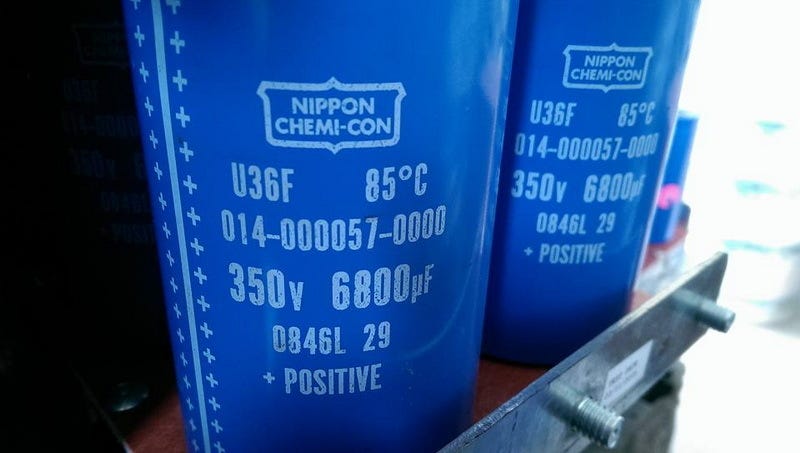
Japan’s electronic-component makers vary widely in their financial conditions. For instance, Murata, which makes multilayer ceramic capacitors (MLCC), has an operating margin of 19.6% for April–June 2026 and has plenty of resources for investment. By contrast, Nippon Chemi-Con, which makes aluminium electrolytic capacitors, posted an operating margin of 4.4% for April–June 2026 and must revive its competitiveness with limited resources.
Profitable data-centre-related orders will help companies invest in technology. Ordinary orders will be necessary to maintain their production scale and customer relationships. Investments prompted by demand from servers can contribute to improving other products that share production techniques, materials, manufacturing processes and human resources. Against this backdrop, how much of these efforts can companies fund themselves? And in areas deemed strategically important, how much support from policymakers is needed to enhance Japan’s strengths? Murata’s MLCC manufacturing process and Nippon Chemi-Con’s technology for manufacturing electrode foil used to produce capacitors will be useful references for consideration.
Everyone wants the ordinary orders
For both, however, winning more orders, especially of general-purpose products, is critical. At market-leading Murata, management has lowered its minimum operating-margin target for the year ending March 2028 to 18% from the previous 20% as it tries to take on competitors by increasing its market share of multilayer ceramic capacitors (MLCCs), the most common passive components used in electronic equipment. Chemi-Con, meanwhile, wants to increase its operating margin to at least 8% in FY2028 from below that level as it looks to recapture general-purpose business.
In the quarter ended June, Murata’s higher utilisation rate boosted operating profit by about ¥48bn, far more than the ¥17bn help from a weak yen. Overall, operating profit rose ¥36.8bn from a year earlier. Chemi-Con also benefited from volume and currency, by about ¥1.5bn and ¥1.1bn respectively. Higher material, energy, selling and fixed manufacturing costs took back about ¥1.6bn, but operating profit still rose to ¥1.67bn from ¥0.15bn a year earlier.
The two firms’ different situations shine a spotlight on the broader challenge for Japan’s component makers: How to compete against rivals in China, some of which have been producing general-purpose products for consumer electronics at rock-bottom prices? Murata has ample resources: for the year ending March 2027 it plans ¥255bn of capex and ¥174bn of R&D spending, and it has a ¥150bn share buyback in the works. Chemi-Con, by contrast, has little room to expand when it is making only a thin operating profit.
Greater China accounted for about half of Murata's revenue for the fiscal year ended March 2026 and 44% of Chemi-Con's revenue in the quarter ended June this year.
Shipment value by JEITA members posted a second straight year at a record in FY2025 on strong server demand for AI-related applications. Shipments rose 4%. However, Japan’s share of the world’s electronic components has been falling since the mid-2000s, going from around 43% in 2006 to 32% in 2025.
Component makers in China have been getting strong government support in recent years. Viiyong, for instance, posted revenue of RMB1.041bn in 2023, jumping to RMB1.845bn in 2025. The company has a RMB3bn capex plan to lift its annual production capacity to more than 900bn units. Revenue from automotive applications jumped from just RMB14.7m in 2023 to RMB195.3m in 2025 as it won IATF16949 quality-systems certification and AEC-Q200 qualification for automotive MLCCs. The company has begun shipping MLCCs with high capacitance to major server makers, too.
Fenghua is focusing its MLCC investments on products for automotive and industrial-control applications as well as high-capacitance MLCCs after trimming planned investment to about RMB5.27bn from about RMB7.5bn, slashing capacity for smaller capacitors used in consumer products. Fenghua's project reached usable condition by the end of 2025, and its board approved closing it out in April this year. Both companies disclosed subsidies and tax breaks from the government, with Viiyong booking RMB41.5m in 2023, RMB50.7m in 2024 and RMB32.4m in 2025, while Fenghua has been getting support from local governments in the form of assets, income, and favourable tax treatment as a high-tech company.
Some rivals, such as Sanhuan, announced in 2023 they had begun mass-production of advanced MLCCs with dielectric thickness as thin as 1 micrometre and more than 1,000 layers. However, the company did not offer details on mass-production yield or automotive qualifications for reliability.
For now, it appears that Japanese component makers must win orders of general-use MLCCs in order to defend and expand their technological edge in high-end products. But they are not safe from Chinese competition in the upmarket either, as Viiyong is an example that has made technological advances.
Chemi-Con draws the line at foil
MLCCs depend on a range of specialised materials, and METI's policy for advanced electronic components notes that materials and production equipment strongly affect component quality, with much of the key technology lying in the materials. For example, Sakai Chemical develops barium titanate (ceramic material) with appropriate particle characteristics at its R&D centre in Onahama to meet requirements from MLCC manufacturers, while producing them for MLCC production lines at its own Iwaki plant. Similarly, Shoei Chemical develops and manufactures fine nickel powders and pastes as MLCC electrode materials at its R&D bases in Ome and Tosu using its own and its partners’ technologies, including those acquired through collaboration in Canada, then mass-produces them. Noritake is also conducting joint evaluation with MLCC makers of thermal conditions in manufacturing processes and transport conditions between processes at its Komaki plant.
Japan has already introduced subsidies for MLCCs and other components with a view to maintaining production processes and technologies. However, I would like to touch on a point that may have been insufficiently examined in deciding which products to subsidize.
Japan designated ¥21.2bn in the FY2023 supplementary budget to support production of cutting-edge electronic components. Eligible items include multilayer ceramic capacitors (MLCCs), film capacitors, certain types of filters, magnetic sensors, as well as some related manufacturing equipment and materials. Murata, with its subsidiary Kanazawa Murata, and Toray, among others, have been approved for subsidy projects, with maximum grants of about ¥5.4bn and ¥3bn respectively.
Chemi-Con has been focusing on improving yields to restore competitiveness, enhancing productivity, and shifting some products’ final assembly operations overseas. However, the company keeps foil production inside Japan. It transfers the finished product (foil) to its overseas production bases for capacitor production, but manufactures foil in Japan using its own technology. Chemi-Con is concerned that the production process (using chemical substance(s) in a bath and an electric waveform to expand the surface area of the foil, that is, its etching technology) may leak to competitors if it manufactures them overseas. The company is also concerned that it would become difficult to acquire/upgrade machinery incorporating its know-how for optimizing foil production.
However, aluminium electrolytic capacitors, the final products incorporating electrode foils, are not eligible for the current government support. Chemi-Con may find it difficult to apply for support, even if it wants to seek assistance from the government to maintain its advanced technology for foil manufacturing.
Since March 2024, METI has required companies applying for this support to protect core technologies by limiting who can access them. They must treat the engineers and other staff who have access appropriately, including on pay, and sign confidentiality agreements with suppliers that hold the technology. They must also consult METI in advance before, for example, transferring the technology, doing related R&D abroad or raising an overseas plant's capacity by more than 10%. That applies if there is a risk of forced transfer or leakage, or if METI asks. METI may consider it important for Japan to maintain production technologies for components where foreign companies are catching up. For example, Japan’s share of bulk acoustic wave (BAW) filters, eligible for the subsidy, is reported to have fallen below 10%.
While it is important to ensure continued production of such electronic components, the question is whether it is sufficient to identify products to support. Some components, even if widely available, may be difficult to replace in terms of manufacturing technologies. It seems to me important to introduce subsidies for manufacturing technologies/processes that are (1) required to maintain competitiveness in products, (2) difficult to replace, and (3) unlikely to be implemented/maintained without subsidies.
Hiroshima kept developing. At a price.
Micron may be foreign-controlled. But it operates the country’s only DRAM factory. That’s a point of strategic importance to Japan, given Elpida’s failure as Japan’s national champion. That failed memory maker received ¥30bn of preferred shares from the Development Bank of Japan in 2009 only to go bankrupt three years later as prices collapsed.
Micron bought Elpida, including its Hiroshima plant, in 2013. A decade later it made its first announcement of a Japanese investment in cutting-edge EUV lithography to make more sophisticated memory. The plant has been key to Micron’s latest generation of chips. It was the first to make 1-beta DRAM, and has been critical in ramping production of 1-gamma chips using EUV. Micron’s chief executive said the first wafer to make high-bandwidth memory started production at Hiroshima. In July 2026 it began work on another new cleanroom. Kota Nosaka, representative director of Micron Memory Japan, said around 80% of the chip materials the plant needs now come from Japan.
Japan Display: what’s to learn from JDI’s struggles?
By July 2026 Japan had earmarked about ¥775bn for Micron, including for research. It has a commitment from Micron to produce chips in the approved factories for at least ten years. Its 2025 business plan refers to training for adults. And the terms of the grants require reporting on progress, and clawbacks if projects fall through.
The question is whether it got good value for its investment. But it’s hard to assess a return on investment in industrial policy. Some will argue the point was to have Japan-owned memory chips; others say Japan-made chips were the aim; others argue Japan has to get a return on its investments. All are valid, but they’re not always in harmony.
In the case of Japan’s mobile-display maker, Japan Display (JDI), the domestic ownership criterion was met. But when Japanese investment vehicle INCJ invested ¥200bn for 70% of JDI, the display maker struggled. It stopped producing panels in Hakusan and scaled back mobile displays in 2019. By the time INCJ left JDI in 2025, total loans and investments were ¥462bn, of which it recovered about two-thirds. Its investment resulted in a ¥154.7bn loss.
What next for Japanese support of chips?
Beijing scrapped ownership requirements for assembling new-energy vehicles in 2018, allowing Tesla to own its plant. But the deal with Shanghai included a reduction in the rate of corporate taxes from the normal 25% to 15% between 2019 and 2023, and a requirement to invest RMB14.08bn by the end of 2023 and pay RMB2.23bn in taxes from 2023, conditions it met. And the share of parts made locally has risen from around 30% at the start of 2020 to 95% by December 2025. Meanwhile, more than 60 of the Shanghai plant's 400-plus tier-1 suppliers now also serve Tesla's global production network, according to a China Daily report on the Shanghai government's website.
Japan does not have the clout of China, whose huge market allows it to dictate terms to foreign companies. But future grants could include conditions on processes invented in Japan, how Japanese suppliers can win approval to supply chips to other customers, the number of workers who undertake paid training, publishing progress towards goals, and clawbacks if goals are missed.
Who gets trained to run the new lines?
Chemi-Con's subsidiary Chemi-Con Nagaoka had seven dual-arm collaborative robots and 11 other industrial robots working alongside its 87 employees in 2022. This reflects wider demand for automation against the backdrop of a shrinking working-age population in Japan and ageing in China. It also points to opportunities for Japan-based makers of robots and other technologies and integrators of automated processes using robots, inspection technologies, tooling, controls, etc.
However, automation creates shortages of other types of skills. Companies will not necessarily be able to recruit enough people with skills to keep automated systems running, fix errors, and optimise them. Investment in modernising the production process is constrained by a shortage of talent to maintain and improve that process.
One option is training. Training is inadequate, especially among non-regular workers. According to the labour ministry’s FY2024 survey, the share of employees who have received off-the-job training was 44.6% for regular workers, but only 18.4% for non-regular workers.
Companies that receive subsidies to introduce automation should be made to offer paid training opportunities for “non-regular” workers in the labor market who can potentially take on more technical roles. Companies should be expected to provide career paths for such workers to regular, technical positions. This is a tall order. But given the importance of upskilling technical workers in Japan, I think it can be justified, especially in cases where government support is provided.
Companies should be asked to disclose the number of workers who complete such programmes, the number subsequently hired as regular employees, their retention rate, and wage increases. Modernising the manufacturing sector and improving working conditions both hinge on expanding the pool of workers with technical skills.
What I’ll watch next
Murata has more than enough capacity to make these investments. Chemi-Con likely doesn’t. But thin margins aren’t in and of themselves an argument for support.
This is the opportunity. This is what support should be predicated on. This is what I would look for in any applications for support from component makers during the current buildout:
At Murata: materials, process, and yield investments to improve MLCC quality; investments to make Murata’s MLCCs more competitive for general-purpose applications.
At Chemi-Con: next-gen foil at Takahagi; better automation at Nagaoka; a cadre of technicians who know how to keep the foil-making equipment running.
More generally, a credible answer to questions: How much of this investment stays in Japan? How much of this investment wouldn’t have happened without government support? And can you point to clear, measurable investments in productivity and process gains, and paid-for worker training?
Because the ultimate goal shouldn’t just be making sure Chemi-Con and Murata capture as much value from data centre demand as possible. It’s using investments during this period of strong demand to broaden their abilities to make other kinds of components. The question is whether Japanese producers and suppliers will be competitive when data centre demand cools.