

Walk into a Best Buy today and the experience is fine-ish. The floors tend to be clean. The displays work. A blue-shirted employee can probably point you toward the right laptop, and if you’re lucky, the one who helps you actually knows the difference between the models. The Geek Squad desk may or may not have a line. The store-within-a-store sections for Samsung and Apple are slick and impersonal, but without the feel you get at a real Apple Store. It is competent, not revelatory. Best Buy became good enough, and in brick-and-mortar retail, good enough is a high bar.
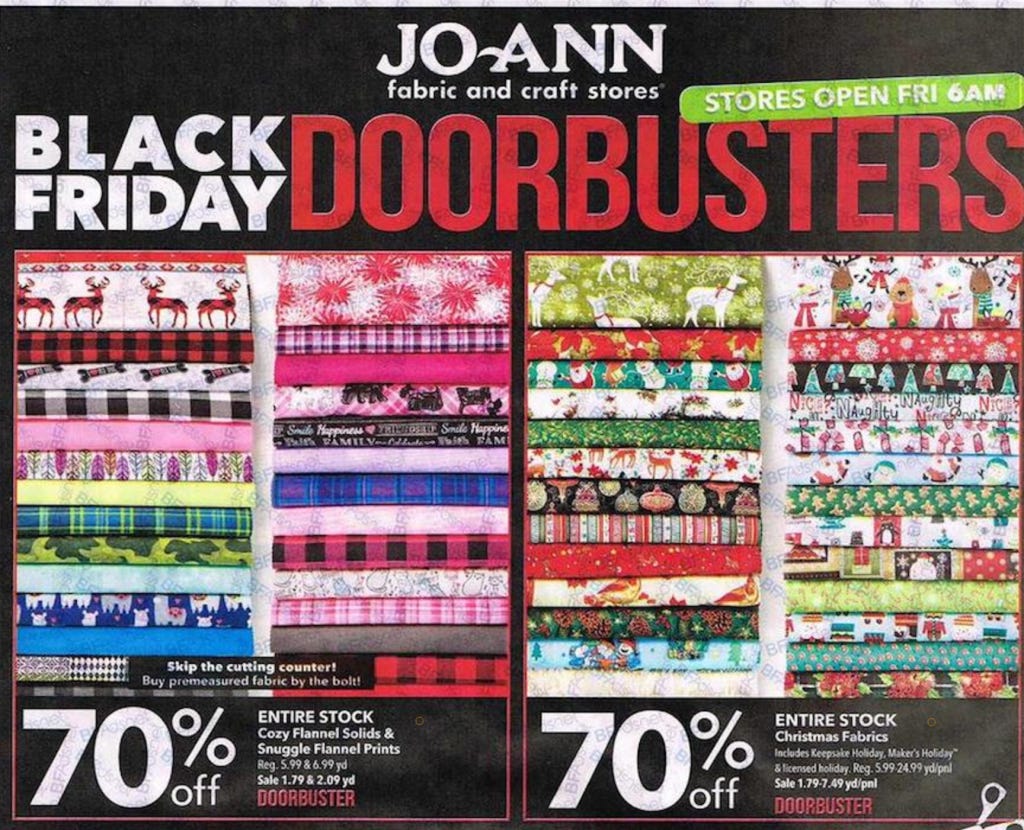
Now try to walk into a Joann Fabrics. You can’t. The last store closed on May 30, 2025. All 800-plus locations were liquidated. Nineteen thousand workers lost their jobs. But in the years before the end, former employees and customers described what it was like to watch the chain disintegrate from the sales floor: bare shelves, skeleton crews, fabric bolts in disarray, nobody at the cutting counter who knew what they were doing. A former district manager told Fortune the problem was self-inflicted: “the business is there.” What was missing was the capacity to run it properly. The stores had been hollowed out underneath the customers.
Best Buy’s customer experience didn’t transform. It stabilized. The company stopped the bleeding, restored basic competence, matched Amazon’s prices, and gave vendors a reason to invest in its stores. That was enough. Joann, meanwhile, didn’t lose to some technological revolution that made fabric stores obsolete. It collapsed because it could no longer afford to stock its shelves, staff its cutting counters, or maintain the store experience that had sustained a loyal customer base for decades. Ninety-six percent of Joann’s stores were cash-flow positive when it first filed for bankruptcy in 2024. The demand was there. The business worked. Something else killed it.
Understanding why businesses actually fail matters regardless of where you sit politically, because it is a matter of short- and long-term governance. When a retailer fails, state and local governments pick up the tab: lost sales tax revenue, unemployment insurance claims, economic development incentives to attract replacement employers. If those failures are driven by demand shifts, that spending is a reasonable cost of economic transition. If they’re driven by capital structure decisions made at acquisition, taxpayers are subsidizing the back end of a private transaction they had no part in. If we misdiagnose Joann as a story about consumer preferences or e-commerce disruption, every downstream decision, from unemployment policy to pension allocation, starts from the wrong premise.
In 2010, Joann was the nation’s largest specialty fabric and craft retailer, founded in 1943 by two German immigrant families in Cleveland who combined the names of their daughters, Joan and Jacqueline Ann, to name the store. It had roughly 850 stores, carried zero debt, and its stock price hit a record high that year. In 2012, Best Buy’s stock had cratered below $15 per share. Analysts were writing its obituary. The company in crisis survived. The healthy one, beloved by wine moms, Etsy witches, and cosplayers, is gone.
What it looks like is that Joann was targeted precisely because it was healthy. It was loaded with debt to finance its own acquisition, and milked for returns until it could no longer invest in adaptation. Category dynamics and management quality matter, and we’ll address them, but the balance sheet story comes first.
The retail apocalypse in context
The phrase “retail apocalypse” took off around 2017, when more than 12,000 physical stores closed in a single year. According to Coresight Research, U.S. retailers announced more than 7,300 store closures in 2024, a 57 percent increase over 2023. Projections for 2025 suggest closures could reach 15,000.
The popular narrative attributes this to the “Amazon effect.” That’s a small part of the story. E-commerce still accounts for roughly 16 percent of total retail sales, per Census Bureau data. Amazon’s share of total U.S. retail is about 4 percent. Total retail sales have continued to grow. It’s a reshuffling, not an extinction.
The Amazon narrative also flatters Amazon. Take Toys “R” Us: in 2000, the toy chain signed a 10-year exclusive deal to sell on Amazon’s platform, paying $50 million a year and effectively surrendering its own e-commerce development. By 2003, Amazon was letting competitors sell toys on the same platform. Toys “R” Us sued, won, and terminated the deal in 2006, but it had lost six years of e-commerce development during exactly the period when online retail was being built. The company that then got loaded with $5.3 billion in LBO debt in 2005 was already competing with one arm tied behind its back. When Toys “R” Us collapsed, the narrative was “Amazon killed the toy store.” And sure, Amazon helped, but it was the LBO that extracted the cash flow and actually killed the company. Amazon got the credit, which translated into a market narrative about e-commerce invincibility that has bolstered its valuation ever since.
That narrative doesn’t hold up in reverse, either. Since acquiring Whole Foods for $13.7 billion in 2017, Amazon has failed at nearly every brick-and-mortar format it has attempted. In January 2026, it closed all its Amazon Fresh grocery stores and Amazon Go convenience stores, essentially admitting the stores didn’t work. Before that, it shuttered its bookstores, its 4-Star shops, and several other formats. Amazon is very good at bits but has repeatedly failed at atoms. On that note of Whole Foods, I don’t know if Errol Schweizer, Grocery Nerd would agree with anything I say, but he writes a great substack on broader grocery business.

The retailers who actually did the hard work of going online get written out of the story. Walmart’s e-commerce share has grown from under 5 percent of its sales in 2018 to roughly 18 percent in 2024, with online sales growing 22 percent globally in fiscal Q4 2025. It leveraged 4,700 physical stores as fulfillment nodes, with 90 percent of Americans living within 10 miles of a Walmart. Home Depot acquired Blinds.com in 2014, an online-only window coverings retailer that was outperforming Home Depot in its own category, then used its e-commerce platform to build out broader online custom-order capabilities. The apocalypse narrative erases them.
The other factors matter at least as much as e-commerce: an oversupply of retail square footage (mall construction between 1970 and 2015 grew at more than twice the rate of population), shifting consumer preferences, the aftershocks of the Great Recession, and the financial engineering of leveraged buyouts that loaded retail companies with debt they could not service, debt that consumed the cash flow they needed to adapt. A retailer that fails because customers no longer want what it sells is fundamentally different from a retailer that fails because its cash flow is consumed by debt service rather than reinvestment. Both are called “bankruptcy,” but the causal mechanisms and the policy implications are entirely different.
Two Companies, Two Ownership Models
Best Buy’s crisis
When Hubert Joly took over as CEO in September 2012, rather than arriving with a grand strategy, he visited stores in a blue polo shirt tagged “CEO in Training.” He learned from a store employee at a pizza dinner that typing “Cinderella” into Best Buy’s search engine returned Nikon cameras.
His operational moves were shrewd. He price-matched Amazon and converted showrooming from a vulnerability into a sales channel. He invited Samsung, Apple, Microsoft, and other vendors to create store-within-a-store experiences, turning Best Buy’s physical footprint into a marketing asset that vendors would pay to support. He made over $1 billion in cost cuts: supply chain optimization, shuttering the venture capital unit, and eventually hundreds of corporate layoffs. The layoffs came last, not first. He exited unprofitable international ventures, including the European joint venture with Carphone Warehouse and the 184-store Five Star chain in China.
Joann’s “rescue”
In 2011, the year before Joly arrived at Best Buy, private equity firm Leonard Green & Partners acquired Joann in an unsolicited bid for $1.6 billion, paying $61 per share, a 34 percent premium over the stock price when analysts were placing targets around $53. That premium itself became part of the debt burden.
The acquisition was structured, as leveraged buyouts typically are, with the debt placed directly on Joann’s balance sheet. The buyout was financed by JPMorgan Chase, Bank of America, and TCW/Crescent Mezzanine. Overnight, a company with zero debt became a company with more than a billion dollars in obligations, plus annual management fees of $5 million payable to Leonard Green.
The standard PE narrative holds that private equity firms acquire underperforming companies, bring operational discipline, and generate returns through genuine improvement. A European study published in the Journal of Corporate Finance, examining buyout targets across 15 EU countries, found the opposite: PE firms typically select companies with lower financial distress risk. Being good at what you do makes you a target for extraction, not a beneficiary of improvement. Joann, debt-free and profitable, was the model LBO candidate.
Parallel trajectories
From 2012, the paths diverged. Joly had the luxury of retaining Best Buy’s cash flow for reinvestment. Non-GAAP return on invested capital rose from 9.2 percent in fiscal 2012 to 13.6 percent by fiscal 2016. Employee turnover was cut in half. Total shareholder return from the end of fiscal 2013 to Joly’s departure in 2019 was 335 percent, compared to 104 percent for the S&P 500.
At Joann, every dollar generated had to be divided between operating the business and servicing debt, including Leonard Green’s management fees, which totaled roughly $50 million over the ownership period. Interest payments in some years topped $100 million on a business with thin retail margins. Debt peaked at $1.3 billion in 2019, according to Crain’s Cleveland Business. Much of it carried variable interest rates, so when rates rose in 2022-2023, Joann’s costs spiked as its revenues declined post-pandemic. The company sold its Ohio corporate headquarters for $34.5 million, converting an owned asset into a lease obligation: immediate cash at the cost of higher long-term expenses.
Joly had seven years of stable leadership to execute his turnaround. Joann cycled through nine CEOs in thirteen years. One of them, Jill Soltau, brought in McKinsey consultants to analyze the workforce, which led to layoffs, continuing a pattern of cutting the knowledgeable in-store labor force that had long been the chain’s competitive advantage. GlobalData analyst Neil Saunders noted that weakening store standards and declining customer service, “partly because of staffing cuts,” made stores less desirable. Customers who needed lower prices drifted to Hobby Lobby. Those who valued convenience went online.
The Structural Precondition
Best Buy was publicly traded with no crushing debt overhang, able to retain cash flow, pursue a multi-year turnaround, and operate without a private equity sponsor claiming a share of every dollar. Joly had time and capital.
Consider the counterfactual. If Best Buy had been taken private in a leveraged buyout in, say, 2011, when its stock was depressed and it looked like a classic distressed target, the acquirer would have loaded it with billions in debt. Renew Blue would have been impossible. Dick Schulze did consider a take-private bid, but never followed through. That non-event may have been the most consequential moment in the company’s recent history.
The Hobby Lobby counterfactual
There’s another comparison worth making, not with Best Buy but with Hobby Lobby, Joann’s direct competitor in the crafts space. According to former Joann executives, Hobby Lobby’s rise as a national rival was the tipping point for Joann’s competitive decline.
Hobby Lobby is family-owned by the Green family (no relation to Leonard Green & Partners, despite the coincidence). As one former Joann executive put it, Hobby Lobby “didn’t have hundreds of millions in debt to worry about, or management fees.” That cost advantage flowed straight to the consumer.
Joann responded by cutting costs, which degraded its customer experience, which drove more customers to Hobby Lobby: a spiral it never escaped. The proximate cause of death was competition and declining sales; the underlying cause was an ownership model that stripped the company of its capacity to compete.
The crafts retail category was facing structural pressures even before Leonard Green arrived: generational shifts in hobby participation and online competition from Amazon and Etsy. A debt-free Joann would not have been immune to them. But there is a vast distance between gradual competitive decline and total liquidation of 800 stores in a matter of months. What bridges that distance is the balance sheet.
Death by Degrees
The pandemic mirage
COVID-19 briefly appeared to save Joann. Revenue surged nearly 25 percent year-over-year in the first nine months of 2020. Net income swung from a $188 million loss to $174 million in profit across the first three quarters. Leonard Green seized the moment to take the company public again. The 2021 IPO raised $131 million, roughly 30 percent below its target, with proceeds going to pay down debt while Leonard Green remained majority shareholder. This was an exit attempt, not a growth strategy.
Sales collapsed soon after, and the stock cratered below a dollar, triggering Nasdaq delisting.
Double bankruptcy
Joann filed for its first bankruptcy in March 2024, emerging 40 days later as a private company after cutting $505 million in debt. But even halving the debt wasn’t enough. Less than a year later, in January 2025, Joann filed again. This time, no buyer materialized. Liquidation followed. The last store closed on May 30, 2025.
Leonard Green had collected management fees throughout, and the fund vehicle that acquired Joann (Green Equity Partners V) earned an 18.5 percent internal rate of return across the fund’s portfolio. Michaels acquired Joann’s intellectual property and brands but none of its stores.
The Great Filter: PE as Predator, Not Doctor
Joann’s story would be troubling enough as an isolated case. It is not.
The bankruptcy rate
Researchers Brian Ayash and Mahdi Rastad at California Polytechnic State University found that approximately 20 percent of large LBOs go bankrupt within 10 years, compared to 2 percent among matched control firms that remained publicly traded. In retail specifically, 41 percent of LBOs executed between 1980 and 1995 led to bankruptcy. Americans for Financial Reform estimated that from 2015 to 2020, more than half of all retail bankruptcies involved PE-owned companies, eliminating nearly 542,000 jobs.
Some researchers have found that PE fund experience mitigates bankruptcy risk, but Joann was backed by one of the most experienced retail PE firms in the country. Experience didn’t save it.
The extraction playbook
Appelbaum and Batt describe a recognizable playbook: acquire a healthy, cash-generating business through an LBO; load it with debt used to finance its own purchase; extract fees; execute dividend recapitalizations and sale-leasebacks; cut labor to free cash for debt service; and attempt an exit through sale or IPO. If the company fails, the PE firm’s losses are capped at its equity stake while the company and its workers bear the downside.
Joann’s trajectory maps almost perfectly onto every step.
The roster
The list of PE-owned retail chains that have filed for bankruptcy or liquidated includes Toys “R” Us, Payless ShoeSource, Sports Authority, Gymboree, rue21, The Limited, Barneys New York, and many others.
Toys “R” Us is the canonical parallel. In 2005, KKR, Bain Capital, and Vornado acquired the company for $6.6 billion, of which only $1.3 billion came from the buyers’ own pockets. Before the buyout, Toys “R” Us had $2.2 billion in cash reserves; by 2017, reserves had been depleted to $301 million while debt had ballooned to $5.2 billion. Interest payments consumed 97 percent of operating income in 2007. The company still held a 20 percent share of all U.S. toy sales. It was operationally profitable absent the debt. The PE consortium collected $470 million in fees and interest over the course of ownership. Employment fell from 60,000 to 33,000 by liquidation.
The Cost-of-Capital Asymmetry: How the Machine Runs
PE firms have access to cheaper capital than their portfolio companies deserve, and that asymmetry powers the entire extraction cycle.
Banks provide the debt, institutional investors (pension funds, sovereign wealth funds, endowments) provide the equity, and the PE firm itself contributes remarkably little. As Appelbaum and Batt calculated, PE partners invest roughly 0.6 percent of the purchase price of acquired companies while claiming 20 percent of any gains.
What LPs actually get
That capital flows to PE not because the underlying investments are demonstrably superior but because the fee structure makes it lucrative for intermediaries. Phalippou’s research at Oxford found that the average LBO fund charges roughly 7 percent per annum in total fees, with gross returns of around 18 percent and net returns to investors of roughly 11 percent, approximately matching public equity indices in recent decades. The wealth creation that does occur accrues disproportionately to the PE partners themselves. The number of PE multibillionaires rose from 3 in 2005 to 22 in 2020.
A 2025 Harvard Law study found that the risk-adjusted performance of PE for pension plans was “approximately zero,” except for buyout funds, which showed modest outperformance partly explained by value-factor exposure rather than genuine alpha. When debt is abundant, PE firms overpay, entry multiples rise without corresponding improvements in outcomes, and more companies go bankrupt. The PE firms themselves, shielded by limited liability and non-recourse debt structures, bear comparatively little of this downside.
The pipeline
Ohio’s State Teachers Retirement System provides a concrete illustration: the pension eliminated cost-of-living increases for retirees while continuing to pay PE management fees on committed-but-undeployed capital, a practice one audit called “money for nothing.” If those fees were eliminated, the pension estimated it could generate $143 million annually; enough to restore the cost-of-living adjustment.
The people who bear the ultimate cost are the same people at both ends: retail workers in Hudson, Ohio, where Joann was headquartered, losing their jobs, and retirees in Columbus losing their cost-of-living adjustment.
If you are interested in this pensions of the puzzle, you might like this

What the Divergence Really Tells Us
The Best Buy-Joann divergence operates on three levels. The primary factor is ownership structure: Best Buy retained the capacity to reinvest its cash flow, pursue a patient turnaround under stable leadership, and respond to competitive pressure. Joann had none of these options after the LBO. The secondary factor is leadership quality, but this is partly a function of ownership. Public companies competing for CEO talent in a transparent market with equity-linked compensation attract different candidates than PE portfolio companies on five-to-seven-year exit timelines. The third factor is category dynamics: consumer electronics had structural features favoring brick-and-mortar adaptation, while craft retail had its own defensible advantages (tactile fabric selection, knowledgeable staff, the inspiration of browsing) that depended on exactly the investments the LBO debt forced Joann to cut.
A brilliant CEO with $1 billion in LBO debt and $100 million in annual interest payments has far fewer options than a brilliant CEO with a clean balance sheet.
A debt-free Joann might still have struggled against Hobby Lobby and online competition, and might have contracted. Leonard Green’s actual profit or loss on Joann is unclear; the PE industry’s opacity makes definitive accounting difficult, and we have been unable to find detailed data on specific dividend recapitalizations at Joann, if any. What is documented (management fees, interest payments, sale-leaseback, the failed IPO) is damning enough.
In the retail sector specifically, characterized by thin margins, high fixed costs, and the need for continuous reinvestment, the LBO model has produced results that demand a structural explanation, not just a case-by-case one.
Great analysis. I think its easy for some to characterize PEs as a bad guy but they are acting rationally in the existing economic environment. If we feel it wrong, we need to change the incentives, you can't shame them to change their behavior
LBOs typically succeed in a "good business / lousy capital structure" situation. Buy the company, refinance the expensive debt, shape up the balance sheet and IPO it before the fund's maturity.
This is one of the unintended consequences of MMT and free money - malinvestment. Trades become more and more marginal - and PE companies are subject to boredom trades as much as any trader.