

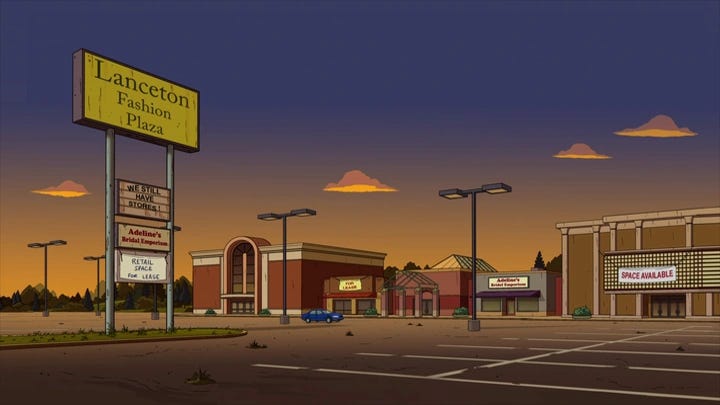
Cities around the world keep losing their commercial cores. In America, suburban malls make the news when Macy’s announces another closure. In the United Kingdom, high streets bleed quietly, one boarded shopfront at a time, until the council notices that the business rates projections have gone hollow. In France, the cœurs de ville of mid-sized towns lose their merchants to out-of-town retail parks. In Japan, shotengai vacancy accelerates faster than municipal budgets can respond. In Korea, second-tier cities watch their downtowns empty while national urban-regeneration funding rises and falls with each election cycle.
The standard response in every country is familiar: do a very limited rezone the site (if we are lucky), subsidize the developer, build something maybe mixed-use (or luxury apartments with a brewery), declare victory, move on. This usually fails (in part not aggressive enough). When it works, as it did in Lakewood, Colorado, or in Margate, Kent, or in a growing list of French communes that have taken Action Cœur de Ville seriously, it works for reasons that have almost nothing to do with zoning and everything to do with the thing that is hardest to talk about: whether the local government involved is actually capable of executing a complex multi-year project with discipline. Most are not.
The reframe this piece turns on: commercial decline is a governance problem just as much it is a zoning/urbanist problem, which means it is also the best opportunity most cities will ever have to build real state capacity. Not a nuisance to be managed. A (dangerous) gym to build up local institutional muscle. We’ll come back to why.
Zoning reform (or just get rid of it) is necessary, and more than likely the prerequisite. Spend five minutes with the evidence on parking minimums, mixed-use prohibitions, and discretionary review timelines and the case becomes obvious. But zoning reform increases the number of attempts without changing the survival rate of each one. At the end of the day, businesses are probabilistic, not deterministic. A perfectly deregulated commercial district with great foot traffic and cheap rents will still see roughly half of its new restaurants fail within five years.
Which is bad for you, the policymaker, because you need tax revenue and visible results. Churn undercuts both: the storefront that closes after eighteen months doesn’t show up in the ribbon-cutting photos, and every visibly empty window is ammunition for the less development-friendly opposition you just beat to pass the reform in the first place.
So, if the odds are bad, can policy move the probability distribution: make more attempts possible, improve the survival rate of each attempt, catch the survivors before they fail for reasons unrelated to their underlying viability. What policy cannot do is make the distribution disappear.
What do YIMBYs and urbanists get from caring about what happens after a unit gets built? Everything. Both movements came out of substantive goals (affordability, jobs, quality of life) not procedural ones, and better local governance is what makes hard-fought reforms survive the next administration. Carmel (for urbanists) and Austin (for YIMBYs) didn't happen by accident.
The stakes are fiscal, not just about aesthetic
Before going further: this actually matters, and not for the reasons people who write about urbanism usually give.
Consider two shapes the damage takes. One fast, one slow.
The fast version is Pittsburgh Mills, in Frazer, Pennsylvania. One analysis documents assessed value falling from $148 million in 2018 to under $15 million by 2024. A 90% collapse of a local property tax base, from a single asset, in six years. Each dying lower-tier American mall also removes something in the range of $1.8 to $3 million in annual sales tax revenue from its host municipality. For some cities where one mall represents 20 to 30% of the local tax revenue. This is not a rounding error, and it’s clear that malls and downtowns are slow motion fiscal emergencies.
The slow version is Detroit, the case in any advanced economy where downtown and urban-core decline produced outright municipal bankruptcy, the largest in U.S. history, filed in 2013. By the mid-2010s, 23% of housing units were vacant, 36% of commercial parcels were vacant, and the property tax delinquency rate had skyrocketed to 54%. The bankruptcy was the visible event; the governance crisis had been developing for fifty years. Yes the city went bankrupted, and the main reason is the Great Recession. But before the recession, Detroit has a property tax base eroded to the point that even extraordinarily high rates cannot fund basic services, commercial vacancy that becomes structural rather than cyclical, and a fiscal situation that makes it easy for the Great Recession to break the city.
Detroit is an extreme example, but the mechanism is not unusual. In the UK, a high street with 30% vacancy generates substantially less in business rates than a healthy one, and the rates system punishes retail while exempting online commerce, so the distressed physical property pays more per pound of turnover than its online competitors. In France, communes rely on taxe foncière and the Cotisation Foncière des Entreprises; both erode with vacancy, and the TaSCom layer adds further exposure to peripheral retail that draws revenue away from the center. This is part of why the Opération de Revitalisation de Territoire framework, which lets participating communes block peripheral commercial permits, exists at all. In Japan, the fixed asset tax and city planning tax erode as shotengai vacancy accelerates, compounded by population decline and aging demographics that raise per-capita service costs. In Korea, property tax and local income surcharges follow the same curve, which is part of why the Urban Regeneration New Deal was framed as an emergency response to municipal fiscal deterioration rather than as ordinary urban policy.
The consequences are concrete. Schools, police, roads, transit, all funded from tax bases that this decline is dismantling.
The damage spreads outward. Cleveland research found that residential properties within 500 feet of tax-delinquent or foreclosed commercial sites experienced a 9.4% value loss between 2004 and 2009. We do not have Cleveland-grade contagion studies for every jurisdiction, and we want to be honest about that, but the qualitative pattern is consistent across UK high street research and Japanese shotengai work: a commercial core in visible decline depresses nearby residential desirability, slows new household formation, and accelerates the outflow of those who can leave. The residential tax base follows the commercial one, on a lag.
When a commercial district collapses, private service density collapses with it: not just retail, but clinics, pharmacies, banks, post offices, grocery stores, childcare. Residents still need these services, and local government either accepts degraded access or backfills at public cost from a tax base that’s simultaneously shrinking. Meanwhile the vacant properties themselves impose costs with no corresponding revenue: code enforcement, fire calls, policing, utility maintenance, planning department time absorbed by proposals that come and go. Across a high street with 30% vacancy or a downtown with more boarded plywood than open signage, staff time gets absorbed into reactive management rather than proactive anything.
Finally, the thing hardest to measure but that may matter most: when a city cannot keep its main commercial core functional, residents stop believing the local government is competent at anything else. That perception is downstream of the fiscal failures and upstream of everything the government wants to do next. A mayor trying to pass a transit bond, build affordable housing, expand school funding, or raise any tax for any purpose is negotiating from a weaker position if the commercial core of her city is visibly dying. A functioning commercial core is evidence of a functioning government. A dead one is evidence of the opposite, regardless of whose fault it actually was. Politics does not grade on fairness.
So why bother? Because this is the best forge you have.
Commercial decline is a serious governance crisis. It is also, paradoxically, an opportunity, and one most cities do not recognize while they are standing in the middle of it.
Three reasons.
First, the results are visible. A mayor who builds a pension fund’s long-term solvency is doing essential work nobody will ever thank her for. A mayor who revitalizes her downtown is doing work that every voter, every local business owner, every visiting relative can see and touch. The political economy of state capacity is usually cruel: the boring work that matters gets no credit, and the flashy work that does not matter gets all of it. Commercial revitalization is the rare case where the political incentive and the substantive outcome point in the same direction.
Second, the problem forces you to build capacity across every front at once. Most governance problems build one muscle. Passing a transit referendum builds lobbying capacity and not much else. Running a successful summer youth program builds contracting and program-management capacity in a narrow domain. Commercial revitalization is different. To do it well, a city has to build planning capacity (diagnostics, rezoning, urban design), financial capacity (grant writing, tax-credit stacking, developer negotiation), land-holding capacity (land banks, community land trusts, legal tools for moving hostile owners), business development capacity (the thing Singapore builds and almost nobody in the West has), and coalition capacity (anchor institutions, community organizations, state and national partners, successor administrations). This is the broadest-spectrum institutional workout any mid-sized city is ever going to encounter. And the capacities built here transfer. A land bank built to handle commercial properties can be retooled for housing. A coalition built to align hospitals and universities around commercial procurement can be redeployed for neighborhood health work. Anchor relationships outlast the specific project.
Third, if you fail, you still learn. The honest truth is that many cities will not fully succeed even when they try. The probabilistic nature of business formation, the hostility of absentee owners, the vagaries of national economic conditions, and the simple slowness of institutional change mean that perfect success is rare. But attempted revitalization produces institutional learning even when the specific project underdelivers. A city that tries and partly fails at a mall redevelopment has a planning department that now knows how to negotiate with developers, a finance office that has learned to work with CDFIs, and a place manager who understands retail. A city that does not try has none of those.
One caveat. This argument applies to cities that already have the problem. A city without commercial decline should not manufacture a commercial project to build state capacity. Different problems make different forges.
One more thing worth naming: the ownership asymmetry
Before turning to what the conventional response gets wrong, one structural observation that runs underneath everything else.
American enclosed malls typically have one owner. Downtowns, high streets, Singaporean strata malls, and most European commercial districts do not. This changes the problem fundamentally, and not in a simple direction.
A single-owner commercial district with an aligned owner is the fastest-moving case in the entire revitalization literature. One negotiation produces site control. No 80% strata consent. No hundreds of individual landlords to chase. One counterparty, one term sheet, one closing. When that alignment exists, nothing in the distributed-ownership literature moves as fast.
A single-owner commercial district with a hostile or indifferent owner is among the hardest cases any mayor faces. A REIT holds the mall through bankruptcy. A successor lender takes it back in foreclosure. An absentee investor holds it for tax loss, or for the option value of eventual land appreciation, and has decided that doing nothing is the most profitable choice. The city then finds itself with one very powerful stakeholder who cannot be moved by any land-use tool the American system currently provides. Eminent domain exists in theory but is politically radioactive and legally uncertain for commercial property. The UK’s High Street Rental Auctions do not exist in America. French préemption commercial does not exist in America. The city is stuck.
A downtown, a high street, or a shotengai is neither: always a collective action problem, slower than the aligned-owner case and more workable than the hostile-owner case. Slower because coordinating many owners takes time, and the tools for forcing coordination are weak in most jurisdictions. More workable because the city can build coalitions with owners who want to cooperate even when others refuse to engage. Progress is incremental but not blocked.
The tools that work in one case often don’t work in the others. Land banks, HSRAs, préemption, community land trusts: these are distributed-ownership tools that consolidate what the market cannot. At a single-owner mall they are largely beside the point; the question there is whether the counterparty can be moved, and if not, whether the city has the legal and financial staying power to make inaction more expensive than cooperation over time. Conversely, the kind of negotiation discipline that makes single-owner mall redevelopment work is not the skill a downtown revitalization actually needs. A downtown needs coalition capacity, patience, and the ability to hold many small wins together long enough to add up to something.
Much of what makes mall redevelopment look successful in the American literature is selection bias: the cases we read about are the ones where the single owner was eventually aligned. The cases where the owner was not aligned do not become cases. They become permanent vacancy, because nothing in the toolkit can move them.
Why the conventional response doesn’t work
The standard move (rezone, subsidize, build mixed-use, attract tenants) has two problems. First, it treats the upstream cause as if it were the downstream symptom. Second, it assumes that someone competent is going to execute.
Commercial decline is downstream of institutional failure, not upstream. Fragmented ownership, absent governance, thin planning capacity, weak business development, disinvested social fabric: these produce the vacancy, not the other way around. Fixing the buildings without fixing the institutions produces what the UK High Streets Task Force, after working with 149 English high streets over five years, honestly called activity without transformation.
The evidence on delegated private management is not subtle. Between November 2020 and June 2021, three major publicly traded mall REITs filed for Chapter 11: CBL & Associates, Pennsylvania Real Estate Investment Trust, and Washington Prime Group. CBL alone was managing 107 properties totaling 66.7 million square feet across 26 states. PREIT filed for bankruptcy a second time by 2024. Mall management firms are doing exactly what they were designed to do. That is the problem. Their obligation runs to investors and creditors, which translates into optimizing net operating income. No accountability to the municipal tax base, the surrounding neighborhood, or the small businesses that depend on foot traffic. And when one entity owns 100-plus malls and its financial model fails, the whole portfolio fails at once: fast, visible, bankruptable. The cities hosting those malls also lose control at once; bankruptcy reorganizations are slow, and cities that had been negotiating with CBL suddenly found themselves negotiating with a lender, then with a creditor committee, then with whichever entity emerged from reorganization. Each handoff reset the relationship. A city without sustained capacity across years loses the thread entirely.
The downtown equivalent is less visible because it rarely produces a single failure event. Instead, you get the slow distributed version: hundreds of absentee landlords making individually rational decisions that collectively produce vacancy, decay, and no one to hold accountable. The principal-agent problem is harder to name when it is distributed across consultants, developers, and BIDs rather than concentrated in a REIT. It is the same problem, less legible.
Business Improvement Districts are the institutionalized version of the delegation move, and the evidence is more differentiated than either side of the BID debate tends to allow. The NYU Furman Center found that large BIDs in dense Manhattan predicted a 15% commercial property value gain over ten years, though Ellen, Schwartz, and Voicufound the gain disappears when a third of the BID budget goes to the executive director, and mid-sized and smaller BIDs showed no discernible effect at all. The deeper critique, from a fifty-year reappraisal of BID scholarship: BID governance excludes renters, workers, and residents, so BIDs optimize for what property owners value (security, cleanliness, brand attractiveness) rather than what communities need (affordable space, diverse business mix, support for incumbent independents). Our point is narrower. BIDs can clean streets. They cannot improve the survival probability of a merchant whose business model has been disrupted.
Japan offers the most instructive cautionary tale. The machizukuri sanpo, a package of three laws enacted between 1998 and 2000, was Japan’s attempt to address commercial core decline at national scale. The research is sobering: these laws did not revitalize city centers. An MIT study found Town Management Organizations made negligible contributions, largely because TMO boards were dominated by commercial stakeholders, funded by government without performance pressure, and participated in by residents only nominally. This is, almost exactly, the accountability failure of American BIDs translated into a different national context. When the same institutional design fails in two countries for the same reasons, the design is the problem.
The conventional response fails because the conventional framing is wrong. The question is not how to fix this mall, this downtown, or this high street. It is what capacities the decline is asking us to build.
What the reframe implies
If commercial decline is a capacity problem rather than just a simple real estate one, then the question becomes: what, concretely, does a city have to build?
Five things. They are not a toolkit. A toolkit implies the tools are the point. They are not. The capacities are. Each of these capacities, once built, transfers to every other hard problem a city faces. Zoning reform sits inside the first capacity. It is necessary. It is also one part of one capacity.
Capacity 1: Planning, with urbanism as a cross-cutting layer
Planning capacity is the ability to diagnose, design, and execute changes to the built environment that survive legal challenge and political turnover. Urbanism (how blocks, streets, uses, and transit interact to generate foot traffic) lives inside this capacity. It is one lever among several, or even the prerequisite for all other levers. Foot traffic is necessary for commercial activity; foot traffic alone produces tourists, not functioning commercial districts.
What the capacity actually includes: the ability to run a commercial district diagnostic, with every vacant property, every owner, every vacancy duration, and every business quality assessment tracked. The ability to execute rezoning that survives legal challenge: upzoning, mixed-use overlays, form-based codes, all of which most cities in every jurisdiction we examine have to relearn. The ability to reform (or eliminate) parking minimums, which in most jurisdictions is administrative rather than legislative and yet remains one of the most underused year-one levers available. And the ability to steer public facilities to where they do the most commercial good.
That last one is the Japanese contribution, and most planners outside Japan haven’t absorbed it. Field research returns to a simple finding: concentrating city hall offices, hospitals, clinics, libraries, and kindergartens in or adjacent to the downtown core creates the resident demand commercial activity requires. When institutions relocate to peripheral sites, they take their customers with them. Japan has built this into planning law through the Location Optimization Plan under the 2014 revision of the Law on Special Measures for Urban Revitalization, which requires municipalities to designate urban function concentration zones and residential guidance zones. Toyama City is the best-documented case. Its “dumplings and sticks” concept (residential areas as dumplings, transit lines as sticks connecting them to the core) has concentrated population and commercial activity around downtown. A mayor anywhere can borrow the discipline without borrowing the statute: think about where public investment locates, what it draws around it, and how transit ties the result together.
Villa Italia Mall in Lakewood, Colorado closed in 2001 with over 50% vacancy, and was rebuilt as Belmar: 80 shops, 20 restaurants, 300,000 square feet of office, 3,500-plus residents, nine acres of parks. It now generates roughly $17 million annually in tax revenue, more than four times what the old mall produced. Three things made this work, none of them zoning alone. The city acted early, before the tax base had collapsed. It recruited the developer rather than responding to a developer proposal, which preserved negotiating leverage. And it broke the 104-acre site into 22 city blocks with a conventional street grid, which turned the urban design into its own governance discipline.
Chattanooga, Tennessee is the downtown equivalent, over forty years rather than ten. By the 1980s, Chattanooga had a deteriorating downtown and an industrial pollution problem that had earned it the label of America’s dirtiest city. What followed (a ULI panel in the mid-1980s, the Vision 2000 initiative, the River City Company seeded with $12 million from foundations and banks, the Tennessee Aquarium, the pedestrianized Walnut Street Bridge, a 22-mile riverwalk) produced downtown retail vacancy below 2% by 2016 and 23% downtown residential population growth from 2000 to 2015. Belmar and Chattanooga are not copies of each other. They share a deeper pattern: accountable governance with political stakes, simultaneous attention to container and content, and sustained institutional commitment across election cycles rather than within them.
When this capacity is absent, it looks like Youngstown. Youngstown, Ohio lost 60% of its 1930 population and in 2005 adopted planned contraction as its governing strategy, the first major American city to formally accept that it would be smaller going forward. The plan was visionary. MIT research found it was only partially implemented as zoning, because of political, legal, social, and economic resistance. The gap between the plan and the zoning is the capacity gap. It is common, and it is expensive.
Capacity 2: Financial capacity
Financial capacity is mostly an administrative problem, not a money problem. The federal toolkit exists. Most small cities cannot access it. The same logic applies, with different specifics, across the OECD.
The most underused lever we found is the Federal Historic Tax Credit. Since 1976, it has leveraged $257.8 billion in private investment and produced 3.4 million jobs. Half of all projects are in neighborhoods at or below 80% of area median income. The National Trust reports a $1.20 return in tax revenue per dollar invested. For a mayor with an eligible historic building at risk of demolition (a downtown hotel, a Main Street bank, a former department store), the HTC is often the most powerful tool available, because it makes private rehabilitation financially viable without requiring public capital. No new legislation needed. The State Historic Preservation Office is already staffed to walk developers through the certification process. The reason the HTC is underused is not policy; it is that most municipal planning departments do not know it exists. European and Asian equivalents (UK Historic England grants and Architectural Heritage Fund loans, French monuments historiques fiscal advantages, Japanese and Korean cultural property designations) are narrower in scope but exist.
Community Development Block Grants are the most flexible U.S. federal program for commercial revitalization, and Iowa’s Downtown Revitalization Fund is a well-documented state deployment. The catch is that accessing CDBG requires a Consolidated Plan, HUD compliance, and reporting capacity; for smaller cities, the first investment is often staff, not projects. New Markets Tax Credit offers a 39% federal credit over seven years but requires a CDFI partnership most cities do not have. Both tools are real; both require partner capacity that is itself the thing to invest in.
TIF deserves honesty about its record. It is authorized in 49 of 50 U.S. states, with at least 10,000 districts nationwide, and David Merriman’s Lincoln Institute review of 30-plus studies concluded that in most cases, TIF has not accomplished the goal of promoting economic development. The “but-for” test gets gamed. Retail TIFs shift activity without creating it. In Chicago, roughly $660 million (nearly a third of all city property taxes) flows to TIF districts, shielded from standard budget oversight. TIF is defensible when paired with a specific project and rigorous “but-for” discipline, as in Belmar. It is least defensible as a general downtown subsidy program. The capacity question is whether your city can run the “but-for” test with integrity. If the answer is no, TIF is not the right tool, regardless of what neighboring cities are doing with it.
Main Street America remains the most evidence-backed template for downtown commercial district management in the U.S., though its reported statistics are self-reported by participating communities rather than independently evaluated. The $115 billion reinvested, the 815,000 net jobs, the $18.03 per dollar return: treat these as pattern evidence rather than causal estimates. The finding that holds up across independent research bodies is narrower and more important: Texas Main Street is explicit that effective downtown revitalization requires paid staff. Volunteer management underperforms paid management. This appears in the Main Street literature, the BID literature, and the UK High Streets Task Force findings. When three independent bodies of research agree on something this specific, it is worth believing.
Capacity 3: Land-holding capacity
Land-holding capacity is the ability to acquire, hold, and redirect distressed commercial properties when private markets will not, whether those properties are dead anchor stores, vacant downtown blocks, or individual high street shops an absentee landlord refuses to lease. Fragmented ownership is the single largest structural barrier to adaptive reuse we encountered in every jurisdiction, and it is also where the international evidence diverges most sharply. Different countries have given their local governments very different powers to act on it.
The American tradition is the land bank, where state enabling legislation permits it. Dan Kildee’s Genesee County model has inspired over 250 similar efforts nationwide, and land banks have done particularly important work in legacy-industrial cities with large downtown and near-downtown vacant inventories, including Detroit itself, where the land bank is now one of the largest landowners in the city. Where enabling legislation is absent, advocating for it at the state level is a medium-term investment. The Champlain Housing Trust, seeded with a $200,000 city grant under then-Mayor Bernie Sanders, now stewards 3,000-plus housing units and 160,000-plus square feet of nonresidential space, and over 200 other CLTs have followed the Burlington template. Commercial CLTs are a newer and less-evaluated model. The Dudley Street Neighborhood Initiative in Boston’s Roxbury, uniquely granted limited eminent domain authority, now stewards over 30 acres including commercial buildings. Systematic evaluation of commercial CLT outcomes is essentially absent; the case rests on governance logic and on the stronger housing CLT track record.
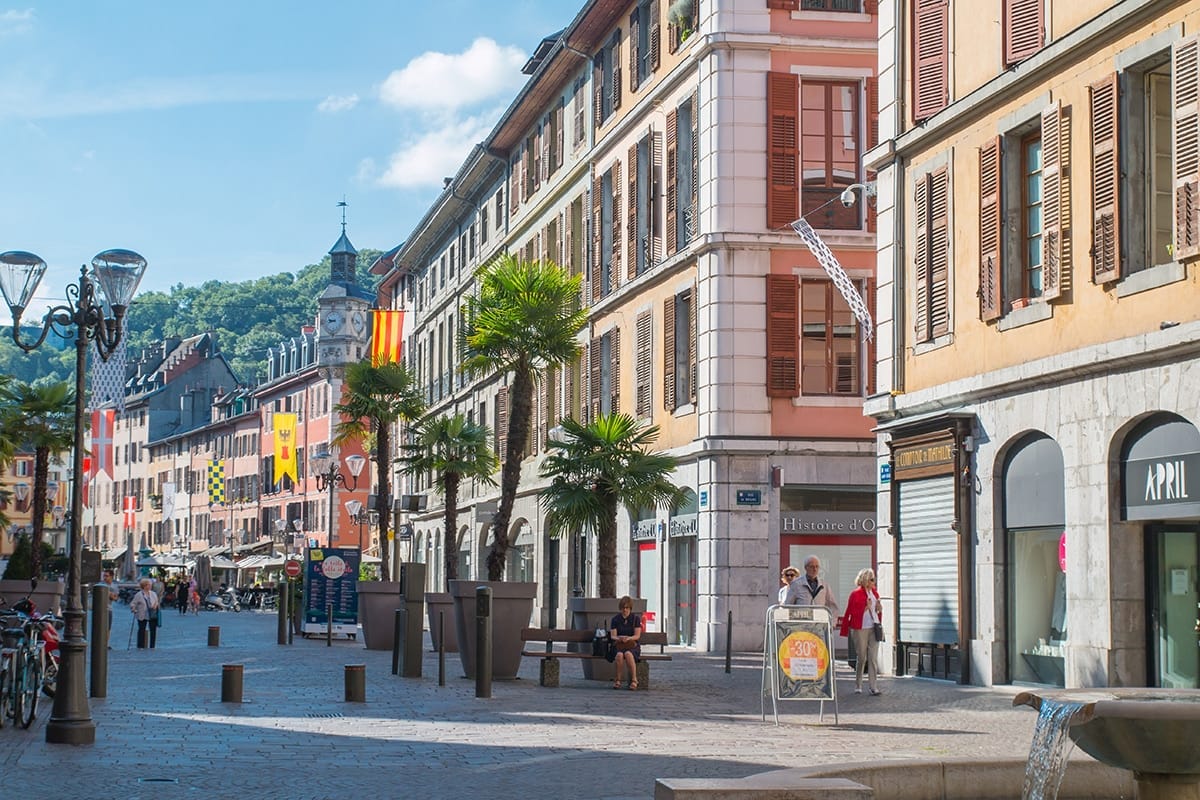
The French tools are the ones Americans and British mayors should genuinely envy. The droit de préemption commercial, codified in 2005, lets a commune designate a périmètre de sauvegarde, receive automatic notification of any sale of a fonds de commerce within that perimeter, and exercise preemption within two months. The commune must then rétrocède the property within two years to a merchant whose activity preserves commercial diversity. A 2023 Conseil d’État ruling clarified that this has to be used for a genuine development project, not as a blocking mechanism. The constraint is that the commune needs capital to buy and manage until rétrocession. The program is embedded in Action Cœur de Ville, literally Action for the Heart of the City, which since 2018 has mobilized more than €5 billion across 244 mid-sized communes. Phase 1 results include a 15% footfall increase and 91% elected-official satisfaction. The Opération de Revitalisation de Territoire framework lets signatory communes suspend peripheral commercial permits that undermine the center. A direct anti-peripheral mechanism. No Anglo-American equivalent exists.
The UK’s new power is High Street Rental Auctions, operational since December 2024. A property vacant for 365 or more days in a 24-month window can be designated, noticed, and, if the landlord fails to let within eight weeks, auctioned for a 1-to-5-year lease. Early adopters include Bassetlaw, Darlington, Mansfield, and Rugby. Industry analysis flags real capacity constraints around surveying, legal fees, and judicial review risk. In Broxtowe, the threat alone was sufficient to prompt a landlord to act without the council completing the process. The carrot-and-stick effect is real.
The most reproducible move in the distributed-ownership case is activation before renovation. Japanese field research consistently finds that creating reasons for people to come to the commercial center (farmers markets, festivals, concerts, whatever) before investing in physical improvements works without large capital budgets. The related move is cheap space for new entrepreneurs, removing the financial barrier to entry; the MAD City project in Matsudo subleased nearly vacant buildings cheaply without restoration obligations. Germany arrived at the same insight under harder conditions: Leipzig’s population fell from 700,000 to under 500,000, housing vacancy hit 20%, and Stadtumbau Ost, launched 2002 with €2.7 billion in federal and state funding, allowed demolition as a legitimate tool while managing interim vacancy through Zwischennutzungen: community gardens, artist spaces, green infrastructure. Leipzig was growing again by 2008.
Returning to the single-owner mall question. When the owner is aligned, none of this matters. Land-holding capacity is beside the point, because the city can negotiate directly for site control. When the owner is not aligned, none of this works either, because the distributed-ownership tools assume fragments to consolidate. What the city needs instead is a different set of tools: receivership frameworks that can take properties from negligent owners, mandatory maintenance codes that create holding costs, land-value taxation that makes sitting on vacant commercial property expensive, and legal staying power across multiple administrations to pursue these remedies to their conclusion. Few cities have built these well. This is among the largest gaps in municipal capacity anywhere, and one of the hardest to close, because most of the fixes require state or national legislation that varies by jurisdiction. We return to this in the advocacy agenda.
Capacity 4: Business development capacity
Business development capacity is the ability to improve the survival probability of the businesses operating in a commercial district, not just to rehabilitate the buildings around them. This is the most underbuilt capacity in every Western city we examined, and it is where international comparison yields the clearest transferable lessons. Physical rehabilitation creates the conditions for commercial improvement. It does not produce it. A renovated storefront occupied by a low-quality business is still a low-quality business.
The institutional state of the art is Singapore’s Heartland Enterprise Centre, established in 2019 and fully funded by Enterprise Singapore. HECS assisted more than 2,000 heartland enterprises in 2024 alone. The Heartland Enterprise Placemaking Grant funds merchants to organize promotional events. The Enhanced Visual Merchandising Programme helps shops refresh storefronts. The Heartland Innovation and Transformation programme places selected merchants in incubator spaces (Sprout@AMK in Ang Mo Kio is the first) for twelve months of mentorship and concept testing, after which graduates can apply for subsidized HDB shop space. The 2026 Singapore budget expanded the program further as a deliberate instrument of neighborhood commercial quality uplift. This is not generic small business advice. This is the machinery of moving the survival probability distribution.
Two of HECS’s four components are within reach of most mid-sized Western cities within a mayoral term, a third requires foundational land-holding work first, and the fourth is probably not coming. Placemaking grants for merchant-organized events are fully transferable: any Main Street organization or chamber of commerce can administer something equivalent on a modest budget. Visual merchandising technical assistance is partially transferable with one dedicated hire paired with an existing place-management program. Incubator space with subsidized post-graduation retail depends on public ownership of commercial space (HDB, in Singapore’s case), which requires a commercial CLT, a land bank, or structured public-private leasing to replicate. And the coordinated inter-agency support across planning, housing, and heritage (Enterprise Singapore acting with URA, HDB, and the National Heritage Board under a single ministry) is the component that genuinely requires Singapore-level state capacity. No American or British analogue exists. Planning around its absence is more useful than pining for it.
Seoul’s Sewoon Sangga project shows the same dual-capacity pattern at a different scale, in a downtown megastructure rather than a neighborhood heartland. When Mayor Park Won-soon reversed the demolition decision in 2015, the plan attended to both container and content. The Suri Cooperative Association linked Sewoon’s craftspeople to new customers: business development organized explicitly to protect existing commercial ecology during regeneration. Per Brookings: visitors tripled, vacancy fell from 30 to 18 units, and the new tenant mix (VR, robotics, CNC manufacturing alongside traditional electronics repair and printing) reflects deliberate ecology-preservation strategy. The caveat is obvious: Seoul Metropolitan Government has professional staff that Daejeon, Gwangju, and Changwon do not, but the institutional move is portable even if the scale is not.
Can’t we just simply regulate businesses? Well, San Francisco’s formula retail ordinance is the closest the Western literature gets to moving the distribution through regulation (which is going as well as you can expect). In controlled neighborhood commercial districts, 10% of businesses are formula retail, versus 25% elsewhere, though the causal attribution is genuinely contested and the Planning Department itself recommended raising the threshold from 11 to 19 locations. Formula retail restriction works best in high-demand markets where vacant storefronts fill quickly; in struggling districts with chronic vacancy, it may leave you with empty storefronts rather than local ones. It does not improve the odds of the individual business.
Capacity 5: Coalition capacity
Coalition capacity is the ability to convene, align, and sustain the institutions whose cooperation determines whether any of the other four capacities produce durable outcomes. Anchor institutions. Community organizations. Business associations. State and national partners. Philanthropic funders. Successor administrations who will inherit whatever you leave behind.
The most documented American template is the Cleveland Greater University Circle model, which is a near-downtown case, not a mall case. Cleveland Clinic, University Hospitals, and Case Western Reserve University (convened by the Cleveland Foundation) aligned hiring, procurement, housing, and transportation commitments across seven surrounding neighborhoods. The outcomes: 859 new housing units, the Evergreen Cooperatives with 225 employees in worker-owned businesses linked to institutional supply chains, $44 million in transportation infrastructure. The Affordable Care Act requirement that nonprofit hospitals conduct community health needs assessments every three years created a policy lever U.S. mayors did not previously have. European equivalents exist but are patchier; the UK’s NHS Integrated Care Systems and the French contrats locaux de santé framework both open convening opportunities that local governments underuse.
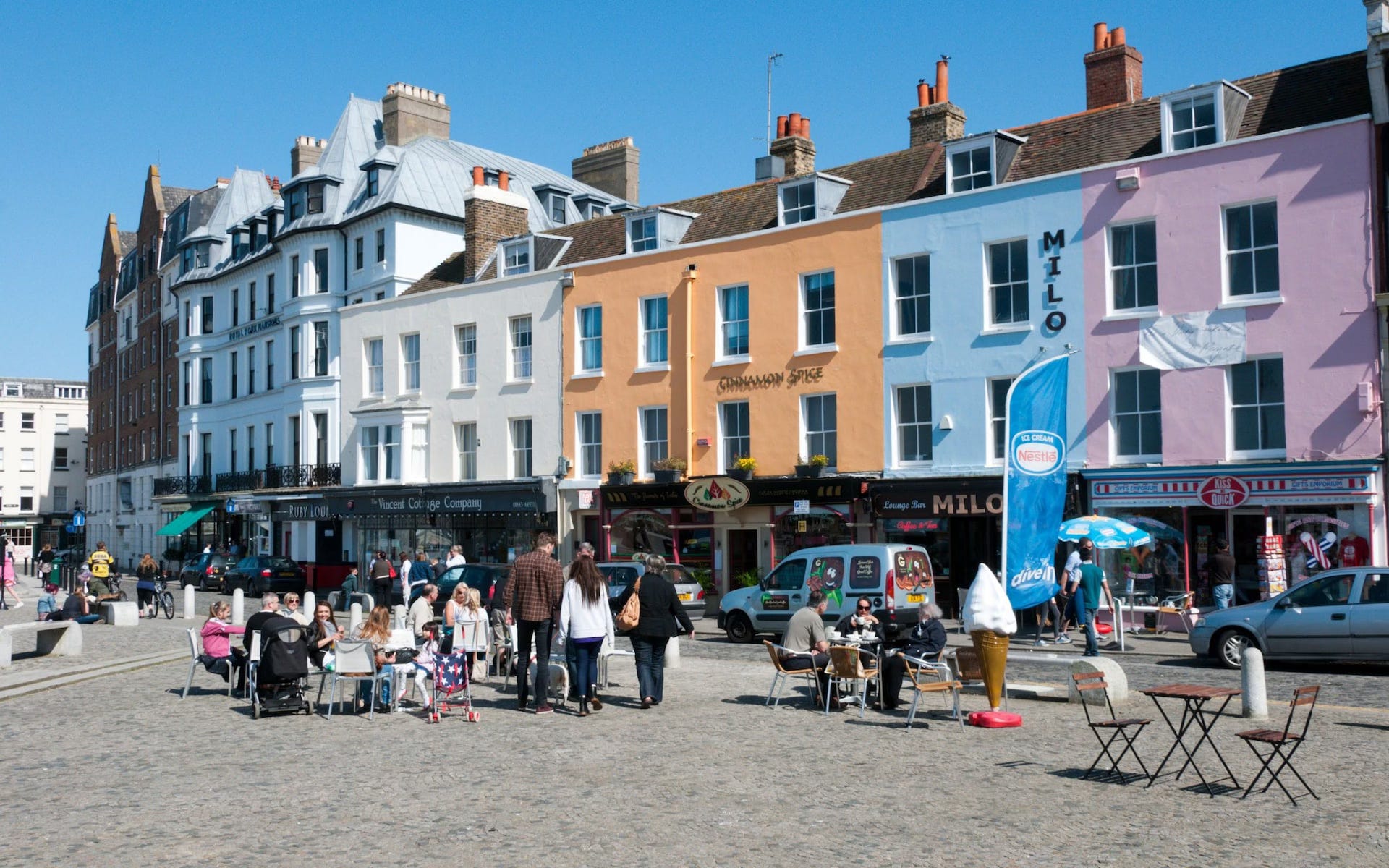
Margate shows sustained council commitment at the UK scale: a Victorian seafront town with a decaying core rather than either a mall or a classic downtown, but structurally the same problem. The Turner Contemporary gallery, opened 2011, plus Thanet District Council’s compulsory purchase and restoration of Dreamland, plus more than a decade of partnership between Thanet and Kent County Council. Reported outcomes: 3.9 million gallery visits, 19% tourism sector growth between 2013 and 2015, £47 million added annually, 300 jobs at the two anchors, £22.2 million in Levelling Up funding. Disentangling Turner Contemporary from concurrent Kent tourism trends is genuinely hard, and the gallery itself acknowledges that not all benefits have been shared by local residents; pockets of deprivation remain. Margate generates visitors and property investment. It does not, by itself, reduce incumbent-resident poverty. The institutional lesson is the sustain itself: more than a decade of coordinated council commitment, not a flagship intervention.
Chattanooga works at this level too, the same case from Capacity 1, doing different work. The coalition half of the Chattanooga story is the 40-year commitment: ULI panel, Vision 2000, the River City Company with its seed capital from eight foundations and seven banks, held together across administrations. Critics reasonably note the benefits flowed unevenly, and this is not a poverty-reduction case. But the institutional sustain is real, and it was produced by coalition capacity, not any single tool.
What happens without this capacity is summarized most clearly by the UK High Streets Task Force. The task force engaged 149 high streets over five years. Its final finding: the main barrier to high street revitalization was the lack of suitable local governance structures. Not ideas. Not funding. Not expertise. Governance. 40% of places visited needed stronger partnerships before any substantive work could begin. You can recommend as much as you like, but it often does not make any difference if the resources aren’t there to deliver. That is the single most important sentence in the five-year task force report.
Korea institutionalizes this well in principle. The Urban Regeneration Special Act 2013 requires each designated urban regeneration area to have a Support Center, a local technical assistance body staffed by planners, designers, and community organizers, with a five-year local activation team that keeps projects alive. The institutional structure is sound. Korea’s problem is that national funding has fluctuated sharply across political cycles, and coalition capacity at the local level is the only thing that partially protects against that.
A (admittedly cliché) call to action
Most cities are not short of space. They have enormous amounts of it. Dead mall pads. Hollow downtown blocks. Half-empty high streets. Vacant shotengai. Shuttered cœurs de ville. What they are short, is ideas, which at the institutional level means capacity. For the cities that have this problem (and hundreds across every country in this piece do), the commercial district is not just a crisis to manage. It is the best opportunity those cities will ever have to build the state capacity they need for everything else. The results are visible, which means voters will reward the work. The problem demands five capacities at once, which means the institutional muscle transfers to housing, transit, climate, and whatever comes next. Even partial success produces real learning.
A mayor who thinks she is fighting to save a mall is fighting the wrong war. A mayor who thinks she is building the institutions her city will need for the next thirty years is fighting the right one, and using the mall as the forge.
Every dead mall, every hollowing downtown, every emptying high street, every struggling shotengai, every shuttered cœur de ville, these are the training ground for every other hard problem a city will face.
The question is not whether to intervene. The question is whether the intervention leaves the city more capable than it found it.
Appendix: the five-minute country cheat sheet
For practitioners who want the jurisdiction-specific starting point.
United States: Main Street America, Center for Community Progress (land banking), LISC (CDFI and financing), NPS Technical Preservation Services (HTC), Democracy Collaborative (anchor institutions), National League of Cities.
United Kingdom: Institute of Place Management, High Streets Task Force legacy, Power to Change, BID Foundation.
France: ANCT (Action Cœur de Ville, Petites Villes de Demain), Banque des Territoires, CEREMA.
South Korea: MOLIT, URIS, Seoul Solution.
Singapore (reference model): URA, Heartland Enterprise Centre
I remember covering the opening of Pittsburgh Mills when it first opened more than 20 years ago, a project doomed to fail the day it opened. (A pink Lucky Strike bowling pin sent to me as a silly PR ploy sits on my shelf…the bowling alley crapped out soon after opening.) I did a story about how the township government decided to establish itself as a tenant within the mall itself: town hall in the mall. It was and is a pretty tiny community that only had a nominal physical presence before anyway and a staff of only a handful of people. Seems like a bit of a metaphor for everything you’ve explored in this generously comprehensive piece.
In the appendix your link for Japan's Cabinet office for Urban Revitalization is broken. I think it should be this: https://www.chisou.go.jp/sousei/index.html