

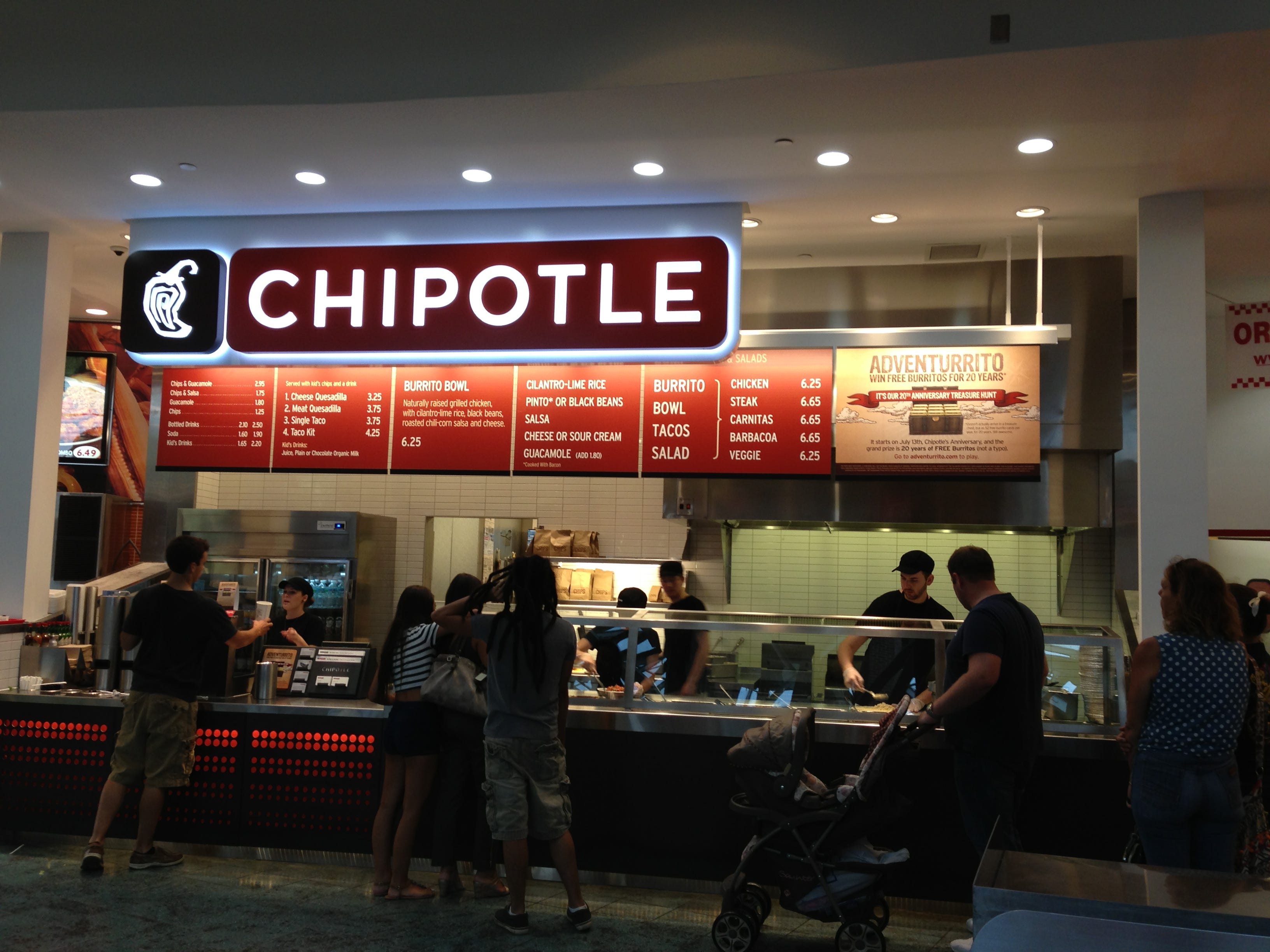
It’s hard to tell whether the great burrito debate of 2026 is a symptom of or a cause of high prices. On 5 August 2026, Andrew Kolvet, a Turning Point USA spokesman, posted a picture of a student’s complaint that a burrito shouldn’t cost $20. The post has been viewed more than three million times. Conservative commentators, including Ben Shapiro, Marc Thiessen, and even JD Vance, are weighing in on whether the student is being fair.
But the median price of a burrito in a restaurant, according to Toast, an American restaurant analytics company, is $13.67, as of July 2026, which is up 2.2 percent on the previous year. Chipotle, the burrito chain, claims the average chicken burrito costs less than $10, although the median is only a statistical abstraction; every time you order a burrito, you get a different price. That said, you can get a frozen burrito at HEB in Texas for as low as 58 cents a pop. Let alone going to a smaller restaurant (who frankly deserves more business than Chipotle).
The food component of the consumer price index (CPI) is up about 34 percent since the beginning of 2020. But some items have become more expensive than others. However, burritos don’t seem to be one of them. Yet, there is smoke in the air, so where is the fire? What cause these debates in the first place?
The fire seems to be (at best) an ill-advised attempt at improving the efficiency of Chipotle’s business. Keeping the real prices the same, while increasing the variation (often in the direction of worsening customer experience and reducing the quality and quantity of burrito stuff).
How Did McDonald’s End Up Building Chipotle?
It started with the world’s most ill-advised options trade, made by Bill Ackman (before he decided to be a full time influencer on Twitter, attacking Zohran Mamdani). In 2005, Ackman was pressing the world's largest hamburger chain to spin off 65 percent of its 8,000 company-operated restaurants and borrow $14.7 billion against its real estate, a restructuring he claimed could lift the share price by half. Most of Pershing Square's 4.9 percent position was held in options rather than stock, which gave him a clock to work against.
It was not clear that McDonald’s was doing well. The company had made some poor acquisitions in the late 1990s. It bought Boston Market, a chain of restaurants that served roast beef and roast chicken. It bought a pizza chain. The most interesting one was a burrito chain called Chipotle: an initial minority stake of roughly $50m in February 1998, growing to about $360m over the next seven years. McDonald’s saw Chipotle as a counter to Taco Bell after falling behind in China, where it had been losing out to Yum Brands, the parent of KFC and Taco Bell.
McDonald’s was hands-off with Chipotle, which was still run by its founder and chef, Steve Ells. Under Ells’s management, the company flourished. In 2006 it became a separate business with its own stock; McDonald's aggregate gross proceeds from the IPO, a follow-on offering and the October exchange offer came to about $1.1bn. Ackman's position paid off handsomely, and he was out of McDonald's by 2007. Chipotle, meanwhile, went public at $22 a share and doubled on its first day of trading, and by August 2015 had reached an all-time high of $757.77.
Ells would have been delighted at the outcome. But he and Ackman were not on the same wavelength. Ackman wanted Chipotle to invest in its business as aggressively as it could to increase shareholder returns. Ells’s management team was more concerned about product quality and consistency. Ackman, who had founded an activist hedge fund called Pershing Square, was concerned about efficiency and reducing variance.
What Made Chipotle Different?
The reason is less interesting, but also less immediately apparent, for what it tells us about capitalism. Chipotle became Chipotle precisely because McDonald’s was hands off, and the same thing happened with other fast food chains. Chipotle, like other fast food chains, started as a competitor that attempted to copy McDonald’s, and was acquired by McDonald’s when it became an up-and-comer. McDonald’s invested hundreds of millions in real estate for Chipotle, and allowed the founder, a chef named Steve Ells, to turn down making french fries or building a family room or installing a drive-through or making the food cheaper with inferior meats. Then, when it became clear that the investment would never be recouped, McDonald’s got rid of it. The sale of Chipotle, and the ensuing public fight between the parent company and the founder, was conducted without even thinking about the workforce or the food. The other chains that followed Chipotle had less luck.
Qdoba copied Chipotle's recipe for success, including the open kitchen and assembly line, plus its own addition of queso and nachos, and was bought by Jack in the Box for $45 million in 2003, when it had 85 locations and $65 million in system sales. But when Chipotle started to expand beyond Denver, Jack in the Box treated Qdoba as a franchise, and installed it in second-tier strip malls. Consistency suffered, and Qdoba was sold to Apollo Global Management for about $305 million in 2018.
Baja Fresh went the other way. Founded in 1990, it was larger than Chipotle with stronger unit volumes when Wendy's bought it for $275 million in 2002. Wendy's did spend on it (a menu overhaul, remodels, and a fourth-quarter 2004 goodwill write-down of $175m to $195m) but never on the brand. In 2006 it sold the chain for about $31 million, a loss of nearly 90 percent.
Chipotle was different from all of these companies, though, and the reason has to do with a concept in cybernetics that has a surprisingly funny name: Ashby’s law of requisite variety, which is the principle that in order to reduce variability in a system, its regulator needs to have as many potential responses as there are states that the system might have to ensure that they never make it to the customer. (For example, Chipotle’s assembly line reduced variety by dividing the restaurant workers into people that pressed tortillas, assembled burritos, bagged them, and took money, and also hiring someone to just cook the food, to make sure the assembly people would never be slowed down waiting for it.) You could think of Chipotle as a company that took on the variety of restaurant operations so that its customers wouldn’t have to, with slack in the system.
Managers were the key, and Chipotle hired the best ones, paying them six figure salaries at a time when few other restaurant chains were doing that, and then evaluated them not just on profitability, but also on how well they could retain their employees and keep morale high and the employees working well together. In addition to its assembly line, the company hired people to cut the cilantro by hand, and to help make sure the food cooked quickly and the assembly line wouldn’t slow down. The managers were allowed to hire heavy, too, which let them control variety and quality themselves. This is also the W. Edwards Deming principle that the optimal performance of a component is not necessarily the best thing for the system as a whole, meaning the component should be allowed to lose money so that the system makes more.
In addition to all this, the counter gave Chipotle a feedback loop, which Stafford Beer called the algedonic channel, that let the managers watch the people that were getting the food, and immediately fix anything that was wrong, from the food itself to the cleanliness of the space. Chipotle grew deliberately, expanding only into markets it could staff with managers it trusted, and set sales records through the great recession. But it was never small: over 500 restaurants by the time McDonald's fully divested in 2006, and 1,572 in the United States by the end of 2013.
It was this management style that allowed the stores to be generous with portions, and made the consistency of generous portions a strength. It’s important because, in a system of speed service, you can’t allow the customers to negotiate, since one customer haggling would slow down the next person in line at lunch. Ells was able to ignore regular price increases (raising the price only when the quality of the ingredients rose) because of the efficiencies he was able to get from his workforce, and he refused to install self-serve kiosks and went out of his way to emphasize the human element. He was willing to take carnitas off the menu at about a third of restaurants in January 2015, after a routine audit found a pork supplier out of compliance with Chipotle's animal-welfare standards, rather than fill the gap with conventionally raised pork. All this added up to an efficiency and consistency that was the stuff of legend, and when McDonald’s sold off its equity stake, the new investor activists had to be careful that they didn’t break what was working. The result was that Chipotle’s stores outperformed not just fast food, but also steakhouses on margin, with higher revenues than the traditional chains and profit margins that exceeded the steakhouses, along with almost no marketing spend. In the decade before 2015, when its stock multiple was higher than anything in McDonald’s history, Chipotle had 9 percent annual same-store sales growth.
What Went Wrong in 2015?
In 2015, Chipotle had a series of food safety incidents. Over the course of a little more than six months, five people fell ill with E. coli O157:H7 in Seattle in July, at least 234 with norovirus in Simi Valley in August, 64 with Salmonella Newport from tomatoes in Minnesota in August and September, 52 with E. coli O26 across nine states from mid-October, and at least 136 with norovirus in Boston in December. In total, more than 500 people across a dozen states were sickened by four different pathogens. The Boston outbreak was later attributed to an apprentice manager told to keep working after vomiting in the restaurant, who two days later helped pack a catering order for the Boston College basketball team.
Chipotle finished 2015 down 30 percent from its August high. By July 2016 it was at $431, down 43 percent from the peak. It did not bottom until August 2017, at $295.11.
Ells’s response was to spend a few million dollars on free burritos, and to overstaff restaurants (which is not a bad idea except that it increases labor cost, which was the result: Chipotle’s operating margin went away in a heap). He was committed to the idea that Chipotle restaurants should continue to do everything by hand, from the prep work on, and to buy produce from local and small farms (which would make it harder to track down a food safety culprit).
His co-chief-executive, Monty Moran (a Chipotle original and Ells's childhood friend), had taken home $28.1 million in 2014 against Ells's $28.9 million; both packages were roughly halved the following year, to $13.6 million and $13.8 million. The eye-watering numbers came the year before the crisis; the year the crisis hit, the company's market value fell by more than $10 billion.
Ells’s chief marketing officer was arrested for drug possession and conspiracy after police wiretaps recorded him discussing arrangements for a monthly cocaine supply. Ells brought him back three months later.
Meanwhile the CDC and the FDA investigations were closed without identifying a specific food item in either of the E. coli outbreaks.
In April 2020 Chipotle agreed to pay a record $25 million fine as part of a three-year deferred prosecution agreement with the DOJ related to food safety outbreaks that affected more than 1,100 people from 2015 to 2018. It found that Chipotle allowed sick workers to come to work and stored food at unsafe temperatures.
Ells’s system had been designed in a way that obscured its own causes. Deming wrote about this. Chipotle sourced its produce from a network of small farms, but didn’t enforce tracking. It did everything by hand and in restaurants. Nobody knew where or when batches had been delivered. Chipotle’s chief of outbreak response said that the tracking system wasn’t granular enough to handle an emergency.
Ells gave a televised apology, and started making some changes to Chipotle’s processes after the fact. His system had failed, but he didn’t know why because he’d designed it to be so loose, and because he didn’t have to worry about cost. His idea of success was based on building loyalty.
Why Was Chipotle So Easy to Take?
In 2016 Chipotle was mired in a series of food-poisoning and safety scandals. Ackman had the perfect excuse to step in. On 6 September 2016, Ackman disclosed that Pershing Square had bought a 9.9 percent stake, worth about $1.2bn, in Chipotle. The 13D covered 2,882,463 shares and made Pershing the second-largest holder. A criminal investigation had already been opened.
Chipotle’s board, for its part, had been chided by shareholders for lack of oversight. Before Ackman made his move, CtW Investment Group (a shareholder activist group that works with union pension funds) and Amalgamated Bank said the nine-person board was insular , long-tenured, and not independent enough to provide oversight.
Chipotle’s management hired bankers and lawyers to defend itself against Pershing Square, and Ells spurned it. But that was easier in theory than in practice. Pershing Square’s power came from its ability to influence the index funds that already owned Chipotle, and they were already unhappy because of the food poisoning fiasco. Before the crisis (and for the first time in Chipotle’s history), the opportunity had arisen for a successful activist takeover. Until 2014, Chipotle stock’s performance was more than 3,000 percent.
On 16 December 2016, Chipotle named four new directors effective 14 December 2016, bringing the board to twelve. Pershing Square’s partners Ali Namvar and advisory board member Matthew Paull (the former McDonald’s CFO) both got seats, as did two independents (Paul Cappuccio and Robin Hickenlooper). Now Pershing Square had two seats on a twelve-person board. Moran was gone three months after the 13D, under pressure from Ackman, and Ackman helped bring Brian Niccol aboard as chief executive in March 2018.
These events led directly to $100 million in cost cuts and an earnings-per-share target of $10 (which, it should be noted, required that Chipotle give up some of the messaging that it had employed before about the future of food and culture), and the hiring of a new chief executive in Brian Niccol, from Taco Bell. Niccol was the right person for this job. He had a track record of getting companies to meet their cost goals and of implementing a customer-facing strategy based on engineered scarcity (limited-time offers) and mobile ordering. He’d built loyalty in a way that Ells hadn’t.
By mid-2017, Chipotle was singing a different song. There had been no contamination incidents in about nineteen months. Sales were growing. Then in July more than 135 people were sickened by norovirus at the restaurant in Sterling, Virginia, again traced to an ill food handler, and the stock fell to a four-year low.
Was It an Accident, or Was It the System?
The Board used the Boston outbreak to claim that meaningful change had occurred when in fact nothing had changed at all. The entire special-cause variation that Ells’s system overlooked was that one ill worker stayed on the job when she should not have, a zero tolerance policy violation. This one violation was enough to give Ackman the opening he needed.
The opportunity for Pershing Square to extract value would not have arisen without Ells’s missteps. The governance failures (Moran’s salary relative to tech industry C-suiters, the board insularity that led to Amalgamated Bank and CtW Investment Group acting on behalf of union pension funds as institutional investors) all were Ells’s own doing and spoke to a character weakness that he showed when he let loyalty to a friend override his sense of duty as CEO and fiduciary to shareholders.
And his commitment to the small farms and the hand-prepped produce was not a failure of quality control; on that, Ells had the advantage that he cared. He just needed a little help from W. Edwards Deming: that quality comes not through inspection, or even adjustment, but improving the design of the process.
But Pershing Square was bleeding. Assets under management fell from $20.2 billion in mid-2015 to $8.2 billion by March 2018, with investors requesting roughly two-thirds of the cash that could be withdrawn, and the firm cutting headcount and lowering its management fees. Ackman needed a visible win, fast. Chipotle would deliver, in spades, because the CEO and his board had already declared norovirus in Virginia an accident when it was actually a special-cause variation in their system. The board was looking for a leader who could improve its image, but they didn’t know how to fix their system, so their new hire was an extractor, which is what he was best at. The norovirus outbreak was an accident because the board didn’t see it as an expression of an underlying failure in the design of Chipotle’s processes and practices.
What Did Niccol Change?
Niccol was hired from Taco Bell where his superpower was in creating demand through engineered scarcity: he would sell a limited-run item and use the wait list, the social media buzz, and the mobile app to create a feeling of must-have-it-now.
At Chipotle, his first major initiative was to grow Chipotle’s app, which rewarded loyalty through a membership program. The rewards program meant that the app could push targeted promotions to a base that now stands at more than 21 million active members. Niccol built a secondary assembly line directly behind the counter, for people who ordered through the app. Those app orders would amount to about 35 percent of total sales, and would double throughput with no increase in the store’s footprint or staffing. And because the customer wasn’t watching, the company eliminated the feedback loop, that conversation between the customer and the crew. Now, rather than each meal being an opportunity for a tiny amount of customer service, or for the customer to exert influence over the outcome, the only feedback was from reconciling inventories at the end of the night.
The rewards program meant that the app could push targeted promotions to a customer base that grew to about forty million.
Over the next few years, Ackman and management at Chipotle implemented a series of measures to tighten control. In the name of consistency, employees were told to use robots to portion the meat. You think that would reduce variance, especially as robots are used to ensure consistent quality in other restaurants, but it seems the bad tail got fatter than the good one at some locations!
You see, managers had to walk around every night with a list of supplies to make sure everything was there, and if there were shortages, they had to report it. Managers and cooks would be told about outliers. A manager who had a lot of high or low outliers might be retrained.
The new system of controls and accountability eliminated all slack in the system. The deliberate overstaffing was gone, and all buffers that absorbed variation were considered waste that could be recovered. Variation in outcomes became more pronounced (the scatter plot shows it). In order to maintain “consistent portion sizes,” Chipotle began retraining the worst ten percent, the same fallacy committed in the funnel experiment: assuming common-cause variation was the result of special-cause variation.
At the corporate level, the headquarters moved from Denver to Orange County, the employees who’d been there since the nineties drifted away. A fifteen-year lease had just been signed in Denver, the menu prices went up fifteen percent (and began to go up every six months) and the experiments were wound down, (though most of that predated him): ShopHouse's fifteen locations closed in March 2017 and Tasty Made's single Ohio restaurant in February 2018, days before Niccol started, with Pizzeria Locale surviving until 2023. Expansion goals were raised from 6,000 to 7,000 locations, on the strength of small-town units, with the market definition broadened to towns of 40,000 people as the drive-throughs were introduced.
Food, beverage and packaging costs fell to 29.5 percent of revenue in 2023 while restaurant-level operating margin rose to 26.2 percent, from 23.9 percent the year before. By 2024 food costs had ticked back up to 29.8 percent. Through 2024, under Niccol, Chipotle has averaged high single digits growth each quarter (Comparable sales rose 8.0 percent in 2022 and 7.4 percent in 2024). The same figure that Ells achieved during the decade before 2015, but in a different way. First by attracting more customers; now, by getting more money out of those that remain.
Did the Portions Actually Shrink?
In June 2024 a Wells Fargo team led by Zachary Fadem ordered and weighed 75 like-for-like burrito bowls across eight New York City locations, half digital and half in store. At the median the two channels came out nearly identical. But the heaviest in-store bowl weighed 47 percent more than the lightest, and for digital orders the gap was 87 percent (between a 26.8-ounce bowl and a 13.8-ounce one). Fadem wrote that consistency varied widely, with some locations serving bowls about a third heavier than others, and that order consistency remained an opportunity for the company. And the majority of the ten lightest bowls came from one store, ordered digitally.
Analysts have called results “highly variable” and said they “warrant further analysis and monitoring,” with Wells Fargo has noted dispersion in portion size has nearly doubled. That dispersion was attributable to consistency within Chipotle’s chain, not just within a particular restaurant, setting Chipotle apart from other fast-food chains like McDonald’s.
Niccol also mentioned in July that at least 10 percent of Chipotle’s 3,500 locations were underperforming in terms of servings, that these outlier locations were identified and receiving coaching and that it is more expensive to be consistently generous with portions. A month later, Niccol left the company and took a job at Starbucks, if you call being the CEO a job.
In November, a disappointed shareholder sued Chipotle and its leadership, alleging that the company downplayed evidence that customers were unhappy with uneven serving sizes. In December 2025, Judge Sherilyn Peace Garnett tossed the case, saying the plaintiff failed to sufficiently allege the executives’ denials were false. In particular, the shareholder couldn’t show that portions were systematically shrunken as opposed to varying by location. Though the shareholder can retry their claims, Garnett’s ruling usefully outlines the difference between the two possibilities.
What Was Ackman Harvesting?
When all that is said and done, though, Pershing Square made a 16 percent return on its Chipotle investment from entry to exit. The S&P 500, by comparison, returned 15 percent. The activist effort involved two CEOs, a hundred million dollars in spending cuts (well, more than that but poetic flair after all), and took nine years. And it outperformed an index by one point.
The details of how it all happened are a case study in brand destruction through short-term margin extraction. When Chipotle hired a new permanent chief executive in November 2024, Scott Boatwright, he declared value pricing a nonissue. More than 60 percent of customers earned more than $100,000 a year, he said, apparently oblivious that they can be extremely sensitive to price and quality changes. In 2025, same-store sales fell 1.7 percent, the first annual decline since 2016. In Q4, comparable sales were down 2.5 percent and transactions were down 3.2 percent. Management is guiding for flat sales in 2026.
During the same quarter, operating margins fell to 14.1 percent and food costs rose to 30.2 percent. The stock was down 50 percent for the year in 2025.
In the end, a brand and customer loyalty built up over decades was converted into modest margin increases over a few quarters. Ackman reduced the fund’s position to about 5 percent by February 2020 and then further pared the position in early 2024. In the fourth quarter, it sold off the final 21.5 million shares and moved that capital into Meta. On the early 85 percent of the position, Pershing Square made a $2.4 billion profit and an IRR that fell just short of 22 percent. Institutional Investor counted the transaction in its tally of activist exits under “facing losses.”
It’s worth considering that the value of the goodwill and trust of Chipotle customers, assets that take decades to build and have little currency in a balance sheet or annual report, was harvested by an activist investor to generate a one percentage point outperformance over an index fund and accidentally cause a ton of discourse about burrito prices.
Why Was There No One at the Helm?
The market’s response was almost predictable because, at this point, it was not Ells’s company. By 2016, 95 percent of Chipotle’s stock was held by institutional investors. Some were dedicated activists, but Vanguard, BlackRock and Fidelity combined owned about thirty percent and did not directly influence the company’s management. In "The Agency Costs of Agency Capitalism," the legal scholars Ronald Gilson and Jeffrey Gordon describe index investors as "rationally reticent": they hold the votes but are reluctant to spend the resources to use them. Reticence is not incapacity. John Coates has shown that the big three exercise a majority of voting power across US public companies, largely through proxy advisors like ISS. Pershing Square didn’t need all of Chipotle. Just a room full of votes, most delegated to firms building scaled models, that can never understand generosity and is more than willing to outsource to a “respectable” player. All PS needed was to be the only one in the room with a point of view.
In 1982 Deming described how managers, faced with this type of organization, would seek to extract value rather than build it. If shareholders’ equity is invisible in the balance sheet, it is invisible to the business model, and thus easy to take. Chipotle was a textbook case. Generosity was measured by customers and employees, but not booked. When it began to dwindle, the financial statements reported waste that could be transformed into a margin. And, once goodwill was depleted, customer traffic began to decline, an effect that lags behind and so is difficult to diagnose.
Niccol and the new chief executive were doing what the market expected and rewarded.
It wasn’t just that, it was also what was in their power at the time. There was something simple and visible they could do to improve Chipotle’s margins at any restaurant immediately: cut portions. Profit margins can be created right away, and can be explained to market analysts. The better feeling from eating at the store is much harder to measure: it is created by sixty thousand hourly employees over many years. It comes from the intangible accumulation of what I was told of as the feeling of generosity. Niccol told Fortune in May 2024 that the portions had not gotten smaller, and said much the same on the July earnings call. The language about heavier ingredient usage came later, in the third-quarter release, by which point he had already left for Starbucks. After, the Wells Fargo team of analysts led by Zachary Fadem visited New York City branches to measure portions. Customers and employees knew better. When you are punished for generosity, it’s clear where the variation will go. I saw how much better the food had tasted before those changes.
How Do You Not See That Coming?
The new chief executive has told investors that he doesn’t think Chipotle should be a value chain, and wants to serve people with higher incomes. It is still too soon to tell if that plan can succeed, though sales continued to decline in 2026.
But there is something eerie and compelling about watching the financial unwind of Chipotle’s brand equity and accumulated corporate goodwill. Pershing Square was making a profit from that goodwill. I was told that the original business was founded in 1993, and then the goodwill of that founding built over the next eleven years allowed the company to charge a higher price without coupons or discounts, to retain and develop managers, and to give customers a feeling of value that didn’t require a financial incentive to come back. There was no accounting entry for that generosity, only a feeling in the store, and so it looked like waste to cut. For Niccol, it may not have even seemed like extracting value: the generosity was never booked so converting it into store margins was a way to save the company. That strategy looked smart, or at least correct, until same store sales started falling around 2025 and it seemed clear the goodwill was gone.
The question is, how do you not see that coming? If Ells was not looking at the risk of his accumulated goodwill being extracted at Chipotle, who was? It seems that Ells spent eight years getting out from under a parent company and by the time of the 2006 flotation was not focused on the need to keep the company independent from activist investors. In that year he did not create a dual class structure or keep a special voting block for himself, as Mark Zuckerberg did at Facebook, or a staggered board that makes it harder for an activist to influence the board, as John Coates has argued. Vanguard, BlackRock and Fidelity all own big stakes in Chipotle, but they are all index funds and cannot intervene. He kept his marketing chief, apparently did not build a system to trace the ingredients in his food, had a board of friends, and called his bankers and lawyers to defend the company only after Pershing Square bought its stake.
Great article! This story of outside tourist investors coming in to gut a company is a tale as old as the 1980s. Speaking about governance, I recently read Erie Ries' (of The Lean Startup) new book Incorruptible which talks about these problems. There are a ton lot of tools available to protect your company not limited to what you mentioned in the article.
Also your story reminded me of the Tylenol recall by J&J in the 80's that was considered the gold standard of PR. Johnson & Johnson also fell in a similar fate in a similar way to Chipotle however. Nowadays they are known for covering up the fact that their baby powder caused cancer.
Best article I've seen from you